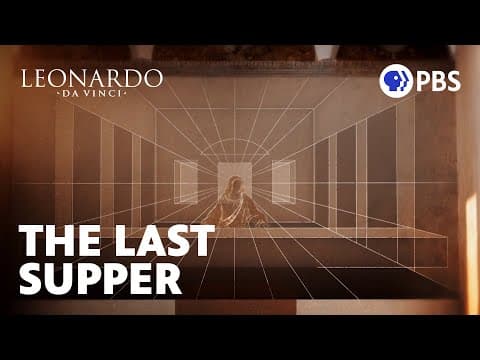
This blog post explores the intricate process behind Leonardo da Vinci's iconic mural, The Last Supper. Commissioned by Il Moro in the 1490s, the painting captures the emotional turmoil of Christ and his apostles during their final meal. It delves into Leonardo's innovative techniques, the dramatic narrative he portrayed, and the philosophical depth that makes this work a timeless masterpiece.
In the early 1490s, the Duke of Milan, Il Moro, commissioned a significant artwork to adorn the refectory of the Church of Santa Maria delle Grazie, a monastery chosen as a mausoleum for his family. This commission would lead to the creation of one of the most famous paintings in history: Leonardo da Vinci's The Last Supper. This blog post delves into the fascinating process behind this monumental work, exploring its emotional depth, innovative techniques, and the historical context in which it was created.
Il Moro selected the monastery, home to an order of Dominican friars, to serve as a resting place for his family. The refectory, where the monks dined in silent contemplation, was the perfect setting for a mural depicting the final meal of Jesus Christ with his apostles. The painting was to be a dramatic representation of the moment when Christ revealed that one of his disciples would betray him, a subject that posed unique challenges for artists due to its long and wide format.
Traditionally, paintings of The Last Supper depicted a serene scene with Christ and the apostles engaged in quiet conversation. However, Leonardo sought to break from this norm. He was inspired by the emotional weight of the biblical narrative, particularly the moment when Jesus declares, "He that dippeth his hand with me in the dish, the same shall betray me." This declaration set the stage for a dynamic and emotionally charged composition, capturing the turmoil and reactions of the apostles.
Leonardo's approach was revolutionary. He envisioned the apostles responding to Christ's words with a range of emotions—confusion, shock, and betrayal. This emotional complexity is evident in the way he depicted their gestures and expressions, showcasing his understanding of human anatomy and psychology. Each figure is engaged in a unique reaction, contributing to the overall drama of the scene.
Leonardo's method for creating The Last Supper was innovative. He began by erecting scaffolding and preparing the wall with layers of plaster and a binding agent. Unlike traditional fresco techniques, which required painting on wet plaster, Leonardo opted for a mixture of oil and tempera. This choice allowed him to work over an extended period, enabling him to achieve subtle transitions of tone and light that were impossible with fresco.
Leonardo's meticulous process involved sketching outlines and using nails for reference points. He constructed a realistic space with geometric harmony, ensuring that all perspective lines converged at the face of Christ. The pigments he used were carefully selected; for instance, he employed vermillion for Christ's garments and ultramarine, made from crushed lapis lazuli, to create a striking blue.
Despite facing pressure from Il Moro due to the slow pace of his work, Leonardo dedicated himself to the mural. He often worked from dawn until dusk, losing track of time and neglecting basic needs. After months of labor, he completed the mural, which measured 15 feet high and 29 feet wide. The final product showcased his mastery of color, light, and shadow, as well as his ability to convey a moment of chaos with precision and harmony.
The brilliance of The Last Supper lies in its ability to encapsulate a fleeting moment in time. Leonardo captured the instant of Christ's announcement of betrayal, with each apostle reacting in a distinct manner. The central figure of Christ, gazing down in sadness, contrasts sharply with the animated responses of the disciples, highlighting the emotional gravity of the scene.
Leonardo's portrayal of the apostles reflects a deep understanding of human emotion. The gestures, expressions, and interactions among the figures reveal their psychological states, making the viewer feel the tension and drama of the moment. This ability to convey complex emotions is what sets The Last Supper apart from previous interpretations of the scene.
For Leonardo da Vinci, painting was not merely a technical endeavor; it was a philosophical meditation. His creative process involved deep engagement with the subject matter, allowing him to explore the emotional and spiritual dimensions of the scene. This transformative aspect of The Last Supper continues to resonate with viewers today, inviting them into a shared reverie as they contemplate the profound themes of betrayal, loyalty, and the human condition.
In summary, The Last Supper stands as a testament to Leonardo's genius, blending innovative techniques with a rich narrative that captures the essence of a pivotal moment in history. The painting remains a timeless masterpiece, celebrated for its emotional depth and artistic brilliance.