This blog post explores the final days of Impressionism, focusing on the contributions of artists like Georges Seurat and Claude Monet, their innovative techniques, and the evolution of art during this transformative period. It highlights how Impressionism transitioned into new artistic expressions while grappling with deeper themes of modern life.
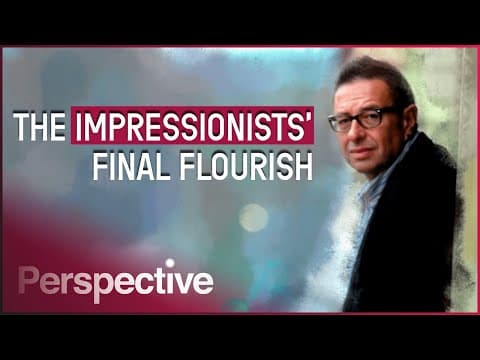
The documentary "Ending The Impressionist Era on A Stunning High" by Waldemar Januszczak delves into the intricate world of Impressionism, particularly its concluding phase. This post will explore the technical aspects of color theory, the pivotal role of artists like Georges Seurat and Claude Monet, and how their works encapsulated the essence of a transformative era in art.
The journey begins at the Ecole de Beaux-Arts in Paris, established in 1648 by Louis XIV. This prestigious art school, while not directly aligned with the modernity of Impressionism, played a significant role in shaping artists like Georges Seurat. Seurat, known for his unique pointillist technique, studied here and was influenced by both classical art and contemporary scientific theories about color.
Seurat's enigmatic nature and innovative approach to painting set him apart from his contemporaries. His breakthrough came with the painting "A Sunday Afternoon on the Island of La Grande Jatte," which debuted at the last Impressionist exhibition in 1886. This work marked a shift from the spontaneous, momentary captures of Impressionism to a more structured and contemplative style.
Before Seurat, Impressionism thrived on capturing fleeting moments, as seen in the works of artists like Pierre-Auguste Renoir and Claude Monet. However, Seurat sought something deeper, aiming to create art that resonated with permanence and introspection. His paintings, characterized by their meticulous application of color in dots, challenged traditional methods and introduced a scientific approach to color mixing.
Seurat's fascination with color theory was influenced by scientific literature available during his studies. He experimented with the optical effects of color, believing that colors could be mixed in the viewer's eye rather than on the canvas. This revolutionary idea was rooted in the understanding of light and pigment, leading to the development of his pointillist technique.
In the documentary, Januszczak transforms the chapel at the Ecole de Beaux-Arts into a laboratory to demonstrate Seurat's theories. By using dots of color, Seurat aimed to create a luminous effect that would engage the viewer's perception. This method not only showcased his technical skill but also reflected a deeper exploration of how color could evoke emotions and sensations.
Seurat's masterpieces, particularly "A Sunday Afternoon on the Island of La Grande Jatte," encapsulate the complexities of modern life in the late 19th century. The painting portrays a scene of leisure, yet it subtly critiques the social dynamics of the time, hinting at the underlying tensions between different classes in Paris.
The juxtaposition of the affluent and the working class in Seurat's works invites viewers to reflect on the societal changes occurring during this period. His art serves as a commentary on the evolving nature of leisure and the implications of modernity.
As Impressionism approached its conclusion, Claude Monet continued to push the boundaries of the movement. His later works, particularly the series of water lilies, exemplify his innovative spirit and his desire to capture the essence of nature.
Monet's later years were marked by personal challenges, including deteriorating eyesight due to cataracts. Despite this, he created some of his most ambitious works, including a series of large-scale water lily paintings intended for the Orangerie in Paris. These works reflect Monet's deep connection to nature and his relentless pursuit of capturing light and color.
Monet's water lilies are not merely representations of flowers; they symbolize the fluidity of perception and the interplay of light and water. The installation at the Orangerie, designed to envelop viewers in a serene environment, showcases Monet's mastery of color and form, inviting contemplation and reflection.
Monet's final contributions to Impressionism signify not just the end of a movement but the beginning of new artistic possibilities. His ability to adapt and innovate in the face of personal adversity highlights the resilience of the artistic spirit.
The documentary by Januszczak serves as a poignant reminder of the revolutionary nature of Impressionism. Through the lens of artists like Seurat and Monet, we witness the evolution of art as it grapples with the complexities of modern life. The end of Impressionism was not a conclusion but rather a transition into new realms of artistic expression, forever changing the landscape of art.