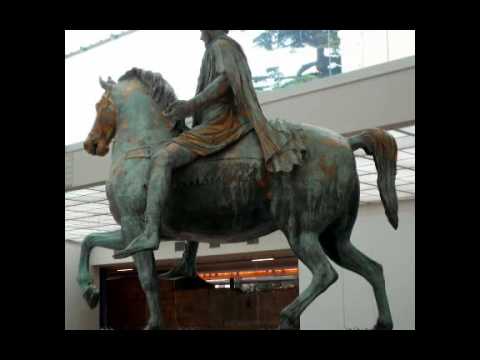
The equestrian sculpture of Marcus Aurelius, housed in the Capitoline Museums in Rome, is the only surviving large equestrian statue from antiquity. Created around 176-180 CE, it symbolizes imperial authority and has influenced Renaissance artists significantly. Its intricate details and dynamic posture reflect the advanced skills of Roman sculptors in representing both human and equine forms.
The equestrian sculpture of Emperor Marcus Aurelius is a remarkable artifact located in the Capitoline Museums in Rome. This monumental piece, believed to have been created around 176 to 180 CE, stands as the only large equestrian statue from antiquity to have survived to this day.
Originally, the exact location of this sculpture in Rome is unknown. It was removed from the Campidoglio, where it had been placed by Michelangelo, due to conservation issues. The significance of this sculpture extends beyond its artistic merit; it represents a unique survival from a time when numerous equestrian statues were erected to celebrate the triumphs of emperors.
The sculpture depicts Marcus Aurelius on horseback, exuding authority and confidence. His left arm is depicted as lightly holding the reins, while his right arm extends outward, suggesting he is addressing his troops or the citizens of Rome. The posture of Marcus Aurelius conveys a sense of command, enhanced by the statue's impressive scale.
This sculpture's survival is particularly noteworthy. Unlike many other equestrian statues that were melted down for their bronze, this piece was preserved because it was mistakenly believed to represent Constantine, the emperor who legalized Christianity in the Roman Empire. This fortunate misidentification prevented it from being repurposed into cannon metal, allowing it to endure through the centuries.
The equestrian sculpture of Marcus Aurelius had a profound impact on Renaissance artists, including figures like Donatello and Leonardo da Vinci. The ability to cast such a large bronze sculpture had been lost after antiquity, making this piece a significant reference point for artists seeking to revive classical techniques and themes.
The craftsmanship displayed in the sculpture is exceptional. The representation of both Marcus Aurelius and the horse showcases a deep understanding of anatomy and movement. The horse is depicted in a dynamic stride, with its neck and head positioned in a way that suggests motion. The folds of Marcus Aurelius's drapery further enhance the sense of movement, as they cascade down over his leg and the horse's back.
The sculpture captures a moment that feels both immediate and timeless. The horse's forward motion contrasts with the subtle tension in Marcus Aurelius's left hand, which holds the reins lightly, indicating his control over the powerful animal. This balance between movement and restraint is a testament to the skill of the sculptor.
The statue serves as a powerful symbol of authority and individual achievement, themes that were central to the Renaissance's humanistic ideals. The revival of interest in the representation of the human form and the celebration of individual accomplishments can be traced back to classical works like this one, which had been largely forgotten during the Middle Ages.
The equestrian sculpture of Marcus Aurelius is not just an artistic masterpiece; it is a historical artifact that encapsulates the values and skills of ancient Rome. Its survival and influence on Renaissance art underscore its importance in the narrative of Western art history. Through this sculpture, we gain insight into the ideals of leadership, authority, and the human experience that continue to resonate today.