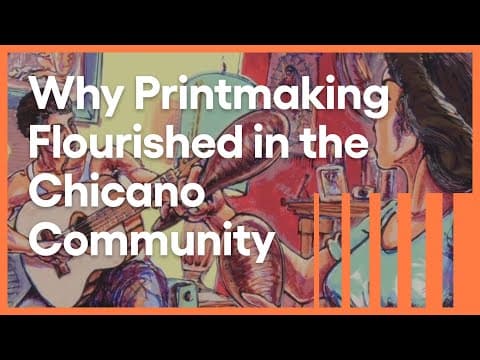
Chicano/a printmaking emerged in the late 1960s and early 1970s as a powerful medium for political expression and community identity, driven by movements for civil rights, labor rights, and cultural representation. Self-Help Graphics played a pivotal role in nurturing artists and fostering a community-based approach to art, with figures like Richard Duardo influencing generations of printmakers. Today, this art form continues to address contemporary social issues, reflecting the ongoing struggles for justice and identity within the Chicano/a community.
In the late 1960s and early 1970s, a confluence of social movements in the United States gave rise to a powerful form of artistic expression known as Chicano/a printmaking. This art form emerged as a response to the pressing issues of the time, including labor rights, civil rights, and cultural identity. Through the lens of printmaking, artists found a way to articulate the struggles and aspirations of the Chicano/a community.
During this transformative period, several significant movements were underway. The United Farm Workers movement sought to unify laborers in their fight for fair wages and safe working conditions. Concurrently, youth in the East Side of Los Angeles were staging walkouts to demand equitable education. The tragic killing of Ruben Salazar, a prominent journalist, symbolized the silencing of community voices amidst the Civil Rights Movement. These events culminated in the Chicano Moratorium against the Vietnam War, which erupted into riots, further highlighting the community's frustrations.
In response to these societal challenges, the need for a dedicated space for artistic expression became evident. Self-Help Graphics was established by a group of artists and nuns, led by Sister Karen Balto, to provide resources and support for artists in the East Side. This organization became a hub for Chicano/a artists, offering a platform to produce work that reflected the community's experiences and struggles.
Jo Aluche, a master printer, played a crucial role at Self-Help Graphics, where many artists, including Richard Duardo, honed their skills. Over two decades, Duardo produced hundreds of images, contributing to the rich tapestry of Chicano/a printmaking. Self-Help Graphics not only nurtured artistic talent but also organized community events that addressed political issues affecting the local population.
Richard Duardo emerged as a significant figure in the Chicano/a art scene, known for his mentorship and guidance to emerging artists. His influence extended beyond the prints he created; he fostered a lineage of artists who would carry forward the principles of Chicano/a art. Duardo's work exemplified the technical excellence of printmaking, showcasing its potential as a fine art medium.
One of his iconic pieces, "Bolo Familiar," illustrates the complexity and beauty of printmaking. The meticulous process involved creating multiple stencils for each color, resulting in a masterful execution that speaks to the themes of family and identity within the Chicano/a community.
Chicano/a printmaking often addresses themes of immigration, cultural identity, and social justice. Works like "La Frenda" and "Sun Raid" resonate deeply with the community's struggles, reflecting the historical context of the United Farm Workers movement and the broader fight for civil rights. These pieces serve as visual narratives that encapsulate the essence of the Chicano/a experience.
The political landscape today mirrors many of the challenges faced in the 1960s and 1970s. Movements such as Black Lives Matter and calls for ethnic studies in schools echo the historical struggles for justice and representation. Artists like Dalila Mendes are continuing this legacy, using printmaking as a medium for political expression. Mendes' work, which addresses issues of immigration and LGBTQ rights, exemplifies how contemporary artists are remixing traditional themes to engage with current social issues.
Chicano/a printmaking has evolved into a vital form of artistic expression that not only reflects the community's history but also addresses ongoing struggles for justice and identity. As new generations of artists embrace this medium, they continue to push boundaries and challenge societal norms, ensuring that the voice of the Chicano/a community remains vibrant and relevant in the contemporary art world. Through printmaking, they articulate their experiences, advocate for change, and celebrate their cultural heritage, making it a powerful tool for social commentary and community empowerment.