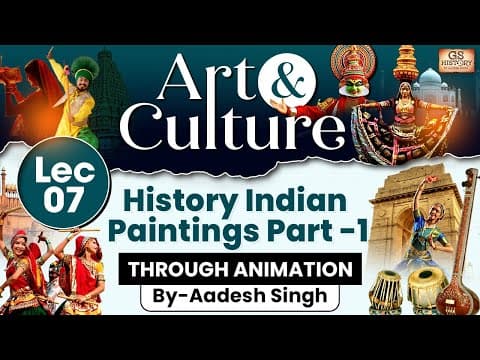
This blog post explores the rich history and evolution of Indian paintings, from prehistoric rock art to modern styles, highlighting key periods, techniques, and notable schools of art.
Painting is a universal language that transcends the need for written scripts. Even before humans had developed language, they likely used painting to express their thoughts and emotions. The history of painting is as ancient as human history itself, and when it comes to Indian paintings, their vibrant colors, artistic skills, and intricate details are unparalleled. Indian paintings are renowned not only for their beauty but also for their fascinating history. In this blog post, we will delve into the evolution of Indian paintings and discuss their various forms.
The tradition of painting in India dates back centuries, with evidence of paintings found from the prehistoric period, approximately 500,000 BCE to 6000 BCE. During this long period, humans engraved images on floors, roofs, or walls. The earliest evidence of this can be found in the Bhimbetka caves near Bhopal, where over 600 painted caves have been discovered. These primitive rock paintings, known as petroglyphs, can also be seen in various locations across India, including Panchmarhi in Madhya Pradesh and Mirzapur in Uttar Pradesh.
As time progressed, the trend of fresco paintings emerged, which were created using wet plaster and pure colors, often based on religious and spiritual themes. A significant revolution in Indian paintings occurred during the Gupta period when the philosopher Vatsyayana mentioned six principles of Indian paintings in his work, the Kama Sutra. These six aspects, known as the "Dangs" of Indian paintings, include:
During this period, Indian paintings were primarily created as murals and frescoes, with the Ajanta and Ellora caves serving as prime examples, depicting scenes from the life of Buddha and other religious and mythological stories.
In the medieval period, various social, cultural, and religious factors led to the emergence of new painting schools. This era saw the rise of significant styles such as Mughal, Rajput, and Deccan painting. The final segment of this evolution spans from the 19th century to the present, marking the modern era of Indian paintings, which was heavily influenced by Western art forms, leading to the establishment of new art schools like the Bengal School and the Progressive Artists' Group.
The continuous development of Indian paintings from prehistoric times to the present has not only transformed their styles and techniques but has also given rise to various categories of paintings, which can be broadly classified into four categories: murals, miniatures, modern, and folk paintings.
Murals refer to paintings created on walls or solid structures. The tradition of mural painting in India began around the 10th century BCE and remained one of the most popular art forms until the 10th century CE. Today, many examples of ancient murals can still be found across India, attracting visitors from around the world. Notable sites include the Ajanta Caves, the Arma Malai Caves, the Ravana Chhaya Rock Shelter, the Bagh Caves, the Sitana Vasal Caves, and the Kailashnath Temple in Ellora.
Ajanta Caves: Located in the Western Ghats, these UNESCO-recognized caves contain 29 rock-cut caves developed between 200 BCE and 650 CE. The murals here are primarily inspired by Buddhism and showcase the use of pigments that have preserved their beauty over thousands of years.
Ellora Caves: Situated about 100 kilometers from Ajanta, Ellora comprises 100 caves, of which 34 are open to the public. The murals here were created in two stages, with intricate features that provide a unique visual appeal.
Bagh Caves: Located in Madhya Pradesh, these caves feature murals that are similar to those in Ajanta but use bolder outlines and darker colors, reflecting a secular theme.
Badami Caves: Situated in Karnataka, these rock-cut temples from the 6th century are adorned with murals depicting various avatars of Vishnu, known for their grandeur and sensitivity in expression.
With the invention of paper, the trend of mural painting declined, leading to the emergence of miniature paintings. These paintings are characterized by their small size, intricate details, and vibrant colors, typically created on paper, palm leaves, or fabric. Miniature paintings can be categorized into five distinct styles:
Early Miniature Paintings: This includes the Pal School of Painting and the Apabhramsa School of Art, which were inspired by Buddhism and Jainism, respectively.
Transition Period Miniatures: During this period, a new painting style emerged in the Vijayanagara Empire, characterized by rich colors and bold outlines.
Miniature Art During the Delhi Sultanate: This period saw the introduction of Persian elements into Indian paintings, creating a unique blend of styles.
Mughal Era Miniature Paintings: Heavily influenced by Persian styles, Mughal paintings shifted focus from religious themes to portrayals of royal life, hunting scenes, and historical events.
Regional Miniatures: These include various sub-styles that developed in different regions, reflecting local culture and traditions.
The journey of Indian paintings from prehistoric rock art to modern styles showcases a rich tapestry of cultural evolution and artistic expression. Each period has contributed to the diversity and richness of Indian art, making it a significant part of the country's heritage. As we continue to explore the various forms of Indian paintings, we will delve deeper into modern and folk paintings in future discussions.