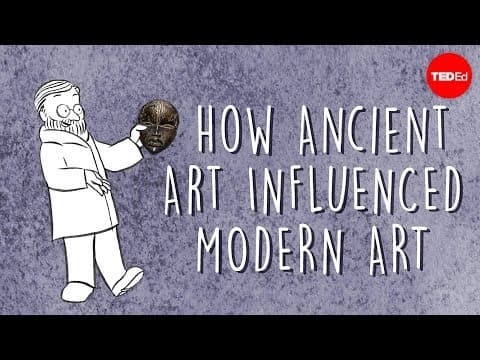
Modern art, originating over 150 years ago, was significantly influenced by ancient art forms, particularly from Africa and other cultures. Artists like Picasso and Gauguin drew inspiration from these traditions, leading to revolutionary changes in artistic expression. This blog explores how ancient artifacts shaped modern art movements and raises questions about cultural appropriation in the art world.
Modern art, often perceived as a reflection of current trends, actually traces its roots back over 150 years. This artistic movement includes renowned figures such as Picasso, Matisse, and Gauguin, who were pivotal in redefining artistic expression. Ironically, the revolutionary styles they pioneered were heavily influenced by traditional and ancient designs.
Historically, European art movements, particularly during the Renaissance, emphasized conventional representation and adherence to classical forms. However, this began to shift in the late 19th century as artists like Vincent Van Gogh and Paul Cézanne started to push the boundaries of painting. This period marked the emergence of a movement that sought to create a new style of art, one that looked beyond the confines of Western civilization.
Paul Gauguin is a prime example of an artist who sought inspiration from non-Western cultures. In the 1890s, he moved to Tahiti, where he immersed himself in the island's inhabitants, landscape, and culture. His artwork began to intertwine European themes with Polynesian lore, showcasing a blend of influences that would characterize modern art.
As European empires expanded into Africa, artifacts and artworks began to enter the hands of museums and collectors. One notable collector was Henri Matisse, who introduced Picasso to a mask from the Dan tribe of the Ivory Coast. This encounter sparked Picasso's curiosity and led him to visit the Trocadéro Ethnographic Museum in Paris in 1907. The museum housed a collection of African art featuring stylized figures and masks made from wood, adorned with simple colors and materials.
Picasso's visit to the museum was transformative. He famously declared that African masks represented the essence of painting. At that time, he was working on a painting that would later be recognized as a cornerstone of modern art: "Les Demoiselles d'Avignon." This work, created in 1907 after extensive sketches and studies, is often regarded as the first true 20th-century masterpiece. It broke away from traditional artistic conventions, presenting an aggressive and abstract style that was both distorted and primal in its geometry.
When "Les Demoiselles d'Avignon" was first exhibited nearly a decade later, it caused a sensation. The public was shocked, critics labeled it immoral, and even Picasso's friends were taken aback by his audacity. This painting marked a significant departure from previous artistic norms and laid the groundwork for future avant-garde movements.
Picasso's groundbreaking work inspired a wave of artists who sought to explore similar themes. Constantin Brâncuși and Amedeo Modigliani in Paris, along with the German Expressionists, began to incorporate the aesthetics of African sculptures into their own creations. This trend was not limited to Africa; artists across the globe sought inspiration from various ancient cultures.
British sculptor Henry Moore, for instance, drew from the Toltec-Maya culture, basing many of his semi-abstract bronze sculptures on a replica of a chacmool, a distinctive reclining statue. Similarly, Josef Albers found inspiration in Pre-Columbian art, creating a series of compositions like "Homage to the Square," which reflected the geometrical forms of pyramids and local art he encountered during his visits to Mexico.
The influence of ancient cultures on modern art initiated one of the most revolutionary movements in art history. However, this raises important questions about cultural appropriation. Were these artists acting as explorers, or were they conquistadors, appropriating ideas and profiting from cultures they deemed primitive? Such inquiries merit careful consideration as artists continue to redefine artistic standards.
As we reflect on the bold innovations of modern art, it is worth pondering whether these once-radical ideas will eventually become stale orthodoxies. Future generations of artists may draw inspiration from yet another unlikely source, continuing the cycle of artistic evolution. The dialogue surrounding ancient influences and modern expression remains vital as we navigate the complexities of creativity in a globalized world.