This blog post explores the tension between realism and personal expression in art, using Pablo Picasso's journey as a backdrop. It discusses the importance of moving beyond mere technical skill to infuse art with emotion and individuality, encouraging artists to find their unique voice rather than conforming to traditional standards of realism.
Art has long been a medium for expression, but the debate over realism versus abstraction continues to spark discussions among artists and enthusiasts alike. This post delves into the complexities of realism in art, drawing inspiration from the life and work of Pablo Picasso, and encourages artists to embrace their individuality.
Pablo Picasso is often celebrated for his abstract works, yet many are unaware that he produced stunningly realistic paintings at a young age. In 1896, at just 15 years old, Picasso created pieces that showcased a level of realism that most artists aspire to achieve. He famously remarked, "It took me four years to paint like Raphael, but a lifetime to paint like a child." This statement encapsulates the struggle many artists face: the tension between technical skill and authentic expression.
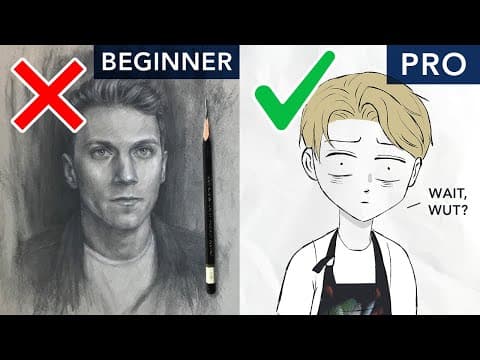
Realism is often viewed as the pinnacle of artistic achievement by those outside the art world, while many artists themselves may not hold it in such high regard. This dichotomy can lead to confusion and frustration for aspiring artists. As a young artist, I found myself caught in this struggle, initially drawing realistic portraits of celebrities to gain validation from friends and family. However, these works lacked personal meaning and emotional depth.
While it is beneficial to study realism and use photographs as references, there is a fine line between learning and copying. Relying too heavily on direct replication can stifle creativity and lead to a lack of originality. The challenge lies in transforming studies into unique expressions that reflect one's personal style and emotions.
As I began to explore more original and stylized art, I encountered the difficulty of stepping outside my comfort zone. My training in realism often led me back to creating lifeless, emotionless portraits. To grow as an artist, I realized I needed to embrace a more conceptual approach, akin to Picasso's journey of rediscovering childlike creativity.
Despite its limitations, realism serves as a crucial foundation for artists. Engaging in realistic drawing and painting helps develop a strong understanding of art fundamentals, such as perspective, anatomy, and the effective use of various media. Many successful artists, even those known for their stylized work, often return to realism to hone their skills and demonstrate their mastery.
Some artists successfully blend realism with creativity, producing works that are both visually striking and emotionally resonant. This genre, which I refer to as creative realism, allows for artistic freedom while maintaining a strong grasp of realistic techniques. Video games, for instance, often showcase this balance, combining detailed graphics with unique artistic styles.
Steve Houston, an influential artist and teacher, emphasizes the importance of moving from the head to the heart in art. While technical skill is essential, it is the emotional connection that ultimately resonates with viewers. Art that lacks purpose or emotional depth can often feel uninspired and forgettable.
Interestingly, many iconic artworks do not rely on realism to make an impact. Simplified and abstracted images can evoke strong emotional responses, as seen in cartoons and other stylized forms. The ability of the human mind to connect with simplified representations speaks to the power of abstraction in art.
The journey to finding one's artistic voice can be challenging, especially when influenced by societal expectations of realism. It is essential for artists to explore their passions and create work that reflects their individuality, rather than merely seeking approval through technical skill. The most compelling art often emerges from a place of authenticity and emotional truth.
In conclusion, while realism has its place in the art world, it should not be the sole focus of an artist's journey. Balancing technical skill with emotional expression is key to creating impactful art. As artists, we must strive to break free from the confines of realism and embrace our unique voices, allowing our work to resonate with others on a deeper level. Remember, the essence of art lies not just in how accurately we depict the world, but in how we convey our own experiences and emotions through our creations.