This blog post explores the complex legal concept of negligence, detailing its definition, the three-part test required to establish a claim, and various examples and defenses associated with negligence claims. It emphasizes the importance of duty of care, breach of standard care, and causation in determining liability.
Negligence is a fundamental concept in tort law that deals with the legal responsibility of individuals for careless actions that cause harm to others. This blog post will delve into the intricacies of negligence, including its definition, the legal tests involved, and various examples that illustrate its application in real-world scenarios.
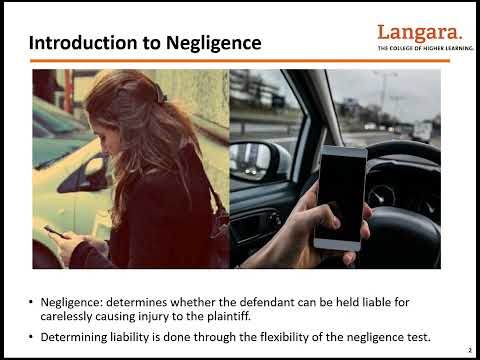
At its core, negligence refers to the failure to exercise the care that a reasonably prudent person would exercise in similar circumstances. It is about holding individuals legally responsible for careless acts that result in harm to others. Unlike intentional torts, negligence does not involve intent to cause harm; rather, it focuses on carelessness or failure to act when action is expected.
While the concept of negligence may seem straightforward, proving a claim of negligence can be quite complex. Not every careless act qualifies as negligence; thus, it is essential to establish a legal framework to determine liability. This framework typically involves a three-part test:
The first element in establishing negligence is determining whether a duty of care exists. This means assessing whether the defendant had a legal obligation to protect the plaintiff from foreseeable harm. Not everyone has a duty to care for every individual; the law recognizes specific relationships where such a duty is imposed, such as between doctors and patients or drivers and pedestrians.
To establish a duty of care, courts often consider:
Once a duty of care is established, the next step is to determine whether the defendant breached that duty. This involves comparing the defendant's actions to what a reasonable person would have done in similar circumstances.
There are three potential outcomes when assessing breach:
The final element of negligence is causation, which requires proving that the defendant's breach of duty directly caused the plaintiff's injury. The legal test for causation is often referred to as the "but for" test: but for the defendant's actions, would the plaintiff have suffered the injury?
To illustrate the complexities of negligence, consider the following scenarios:
A driver who checks their phone while driving and subsequently hits a pedestrian may be liable for negligence. Here, the duty of care exists between the driver and the pedestrian, the driver breached the standard of care by texting while driving, and causation is established as the driver's actions directly led to the pedestrian's injury.
In a more complex scenario, if a person sends a text to a friend who is known to be a distracted driver, and that friend subsequently causes an accident, the question arises: is the sender liable for negligence? This situation hinges on whether the sender had a duty of care and whether their actions were reasonably foreseeable to cause harm.
In the landmark case of Paulsgraph v. Long Island Railway Co., a woman was injured by a falling clock after a series of unforeseeable events triggered by the railway company's actions. The court ruled that the railway company was not liable because the chain of events leading to the injury was too far-fetched to be reasonably foreseeable.
There are several defenses that can be raised in negligence claims, which can either completely absolve the defendant of liability or reduce the damages awarded to the plaintiff:
If the plaintiff contributed to their own injury through careless behavior, this can reduce the damages awarded. For example, if a pedestrian is hit while crossing the street while distracted by their phone, their damages may be reduced due to their own negligence.
If a plaintiff voluntarily assumes the risks associated with an activity, they may be barred from recovering damages. For instance, signing a waiver before participating in a dangerous sport can serve as a complete defense against negligence claims.
If the plaintiff was engaged in illegal activity at the time of their injury, they may be unable to recover damages. For example, if individuals are injured while committing a crime, they cannot sue for negligence.
Negligence is a complex area of law that requires careful consideration of various elements and factors. Understanding the duty of care, breach of standard care, and causation is essential for anyone involved in legal claims related to negligence. By examining real-world examples and potential defenses, we can better appreciate the nuances of negligence law and its implications for individuals and society as a whole.