Abstract Expressionism emerged in the late 1940s and early 1950s as a pivotal American art movement, characterized by its focus on spontaneous, automatic, or subconscious creation. Influenced by the rise of fascism in Europe and the migration of artists to the U.S., it marked a shift in the art world from Paris to New York City, with key figures like Jackson Pollock and Willem de Kooning leading the charge.
As we delve into the arts and architectural traditions of the United States, one movement stands out as quintessentially American during the late 1940s and early 1950s: Abstract Expressionism. This movement not only defined a new era in American painting but also marked a significant shift in the global art scene, with the United States taking the lead in avant-garde art.
To understand Abstract Expressionism, we must first consider the historical context in which it arose. The late 1930s and early 1940s were tumultuous times in Europe, marked by the rise of fascism and the onset of World War II. Adolf Hitler and his regime sought to suppress avant-garde art, labeling it as "degenerate" through exhibitions like the infamous "Entartete Kunst" in 1937. This exhibition aimed to ridicule modern art and promote traditional, conservative values in art, effectively creating a cultural wasteland in Germany.
As artists fled Europe to escape the oppressive regime, many found refuge in the United States. This migration brought a wealth of talent and new ideas, significantly influencing the American art scene. The artists who settled in cities like New York and Chicago would go on to shape what we now recognize as Abstract Expressionism.
Abstract Expressionism is often synonymous with several terms: Action Painting, New York School, and more. It is characterized by spontaneous, automatic, or subconscious creation, emphasizing the act of painting itself as a form of expression. Artists sought to convey their inner emotions rather than replicate observable reality, marking a departure from traditional artistic techniques.
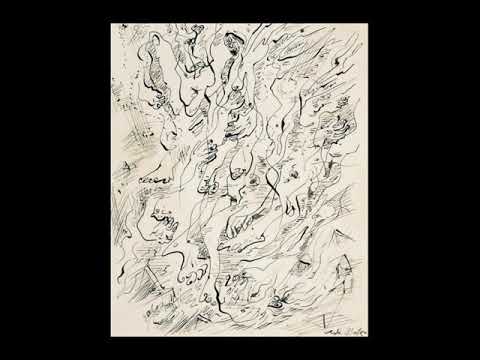
One of the most significant influences on Abstract Expressionism was Surrealism, which emphasized the exploration of the subconscious. Artists like André Masson introduced concepts such as psychic automatism, where the act of creation was driven by spontaneous emotional responses rather than rational thought. This idea resonated with many Abstract Expressionists, who sought to express their feelings through their work.
Jackson Pollock is perhaps the most iconic figure associated with Abstract Expressionism. His technique of drip painting, where he would pour and splatter paint onto large canvases laid flat on the ground, exemplified the movement's principles. Pollock's work, such as "Autumn Rhythm" (1950), is characterized by its chaotic energy and intricate layering of paint, creating a textured surface that invites viewers to engage with the artwork on a visceral level.
Another prominent figure, Willem de Kooning, brought a different approach to Abstract Expressionism. His works often featured aggressive brushstrokes and hints of figuration, particularly in his series of paintings depicting women. De Kooning's "Woman and Bicycle" reflects his complex relationship with femininity and the objectification of women in American culture.
Other artists associated with this movement include Mark Rothko, known for his color field paintings that evoke emotional responses through simple forms and color contrasts, and Franz Kline, who utilized bold black strokes on white canvases to create dynamic compositions. Each artist contributed uniquely to the movement, exploring different aspects of abstraction and expression.
Abstract Expressionism marked a significant shift in the art world, moving the center of the art scene from Paris to New York City. This movement not only established the United States as a leader in contemporary art but also paved the way for future artistic explorations. The emphasis on individual expression and the rejection of traditional techniques influenced countless artists and movements that followed.
In conclusion, Abstract Expressionism represents a pivotal moment in American art history, characterized by its innovative approaches to painting and its profound emotional depth. As we continue to explore the evolution of art, the impact of this movement remains evident in contemporary artistic practices today.