Abstract Expressionism, emerging after World War II, is characterized by large, abstract paintings that evoke emotions. Key figures like Jackson Pollock challenged traditional art conventions, creating a unique style that reflects the artist's psyche. This movement, while accessible in technique, remains exclusive in its historical significance and impact on the art world.
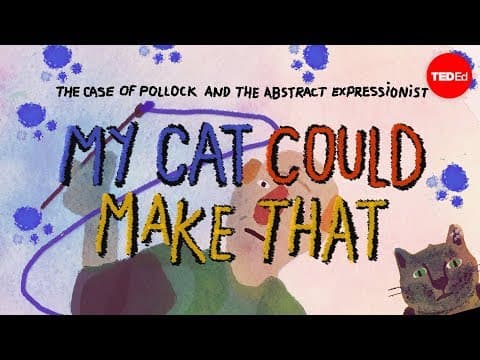
If you visit a museum with a collection of modern and contemporary art, you might encounter works that provoke the thought, "My cat could make that, so how is it art?" This reaction is particularly common in response to a movement known as Abstract Expressionism, also referred to as the New York School.
Abstract Expressionism began to take shape in 1943 and gained momentum after the conclusion of World War II. This art movement is characterized by large, primarily abstract paintings that feature all-over compositions without clear focal points. The sweeping swaths of paint in these works are designed to embody and elicit deep emotions.
Among the artists considered to be part of the Abstract Expressionist movement are:
However, perhaps the most famous and influential figure in this movement is Jackson Pollock. His paintings are instantly recognizable, featuring tangled messes of lines of paint that seem to bounce around in every direction on the canvas.
At first glance, Pollock's work may appear chaotic, leading many to question its artistic merit. Did he simply drip paint at random? The answer is both yes and no. While Pollock employed a technique that anyone could technically replicate, the essence of his work is unique to him.
Pollock's approach was rooted in the Surrealist automatic drawings of artists like André Masson. Surrealists aimed to draw directly from the unconscious, revealing hidden truths within their minds. Instead of picturing something and then drawing it, they allowed their hands to move freely, later identifying familiar figures within the scribbles.
Pollock took this concept further by creating what are known as drip or action paintings. He laid the canvas flat on the ground, a subversive act that challenged traditional painting methods. In a controlled dance around the canvas, he dripped industrial paint using stirrers and other tools, varying his speed and direction to influence how the paint interacted with the surface.
Unlike the Surrealists, who sought to represent the mind's hidden contents, Pollock's work was a physical manifestation of his psyche. His paintings serve as signatures of his mind, capturing the essence of his subconscious.
While anyone could theoretically create a painting that reflects their mind, Pollock's significance lies in the fact that he and his contemporaries were the ones who actually executed this revolutionary approach. They dismantled centuries-old conventions of painting, compelling the art world to rethink its foundational principles.
Pollock's work embodies fascinating contradictions. His process resulted in radically flat painted surfaces, yet the intricate web of lines creates an illusion of infinite depth when viewed closely. The apparent chaos of his tangled compositions belies a deliberate, albeit unplanned, process.
These characteristics contributed to Pollock's celebrity status and elevated him to the mythic status of the genius artist as hero within art history.
While Pollock's work may seem to democratize creativity, it inadvertently reinforced a long-standing elitist aspect of art. The history embedded in Abstract Expressionism is one that no cat, however talented, can claim.
In conclusion, Abstract Expressionism, particularly through the lens of Jackson Pollock's work, challenges our understanding of art and creativity. It invites us to reconsider what constitutes artistic merit and the role of the artist in society.