This blog post explores the concept of Alternative Dispute Resolution (ADR), detailing its processes, advantages, types, and the roles of third parties in resolving disputes outside traditional court systems.
Alternative Dispute Resolution (ADR) refers to methods used to resolve disputes without resorting to traditional judicial processes. This approach is increasingly popular due to its efficiency, cost-effectiveness, and flexibility compared to conventional court proceedings.
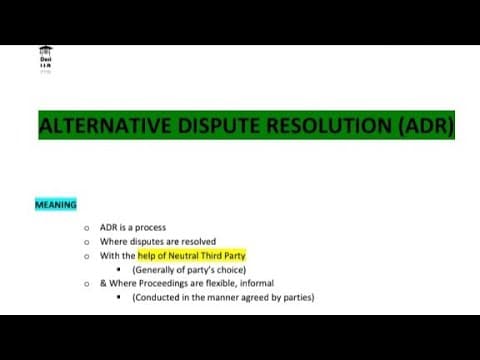
ADR encompasses various processes that allow parties to resolve disputes with the help of a neutral third party. Unlike traditional litigation, which can be time-consuming and expensive, ADR offers a more informal and flexible environment for dispute resolution. The primary goal of ADR is to reach a mutually agreeable solution without the need for a formal court trial.
The traditional judicial process often involves lengthy procedures, high costs, and complex technicalities. ADR emerged as a viable alternative to address these challenges, providing quicker resolutions and reducing the burden on the court system. The flexibility of ADR allows parties to agree on the methods and procedures that best suit their needs.
There are several key types of ADR, each with its unique processes and applications:
Mediation involves a neutral third party who facilitates discussions between the disputing parties to help them reach a voluntary agreement. The mediator does not impose a decision but encourages communication and compromise.
Conciliation is similar to mediation but often involves a more active role for the conciliator, who may suggest solutions and help clarify issues. The goal is to bring the parties together to resolve their differences amicably.
Arbitration is a more formal process where a neutral third party, known as an arbitrator, hears both sides of the dispute and makes a binding decision. This process is often used in commercial disputes and can be faster than court proceedings.
Negotiation is a direct dialogue between the parties involved, aiming to reach a mutually acceptable agreement without the involvement of third parties. This method relies heavily on the willingness of both parties to compromise.
ADR offers several benefits over traditional litigation:
In ADR, third parties play crucial roles:
While ADR has many advantages, it is not suitable for all types of disputes. For instance, criminal matters and constitutional issues typically require judicial intervention. Additionally, if parties cannot reach an agreement through ADR, they may still need to resort to litigation.
Alternative Dispute Resolution offers a practical and efficient way to resolve disputes outside the traditional court system. With various methods available, parties can choose the approach that best fits their situation, benefiting from quicker resolutions and reduced costs. As the legal landscape continues to evolve, ADR is likely to play an increasingly important role in dispute resolution.