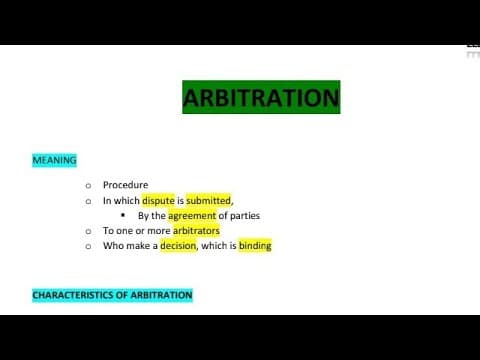
Arbitration is a binding dispute resolution process where parties agree to submit their disputes to one or more arbitrators instead of going to court. This blog post explores the meaning, characteristics, types of cases suitable for arbitration, and the limitations of this process.
Arbitration is a widely recognized method of resolving disputes outside of the traditional court system. This blog post delves into the meaning of arbitration, its characteristics, the types of cases that can be arbitrated, and the limitations of this process.
Arbitration is a procedure in which a dispute is submitted by the agreement of the parties to one or more arbitrators who make a decision that is binding. In simpler terms, when two parties enter into an agreement, they may stipulate that any disputes arising between them will be resolved through arbitration rather than through the courts.
When a dispute arises, the parties select an arbitrator to whom they submit their disagreement. The arbitrator listens to both sides, reviews all relevant documents and evidence, and then makes a decision. This decision is binding on both parties, meaning they must adhere to it.
Consensual Nature: Arbitration is based on the mutual agreement of the parties involved. Both parties must agree to resolve their disputes through arbitration for the process to take place.
Selection of Arbitrator: Typically, the parties choose the arbitrator. If they cannot agree on an arbitrator, the court may appoint one.
Confidentiality: Arbitration proceedings and decisions are generally kept confidential. However, if disclosure is necessary for the enforcement of the decision, confidentiality may not apply.
Finality and Binding Nature: The decision made by the arbitrator is final and binding. There is usually no right to appeal the decision, which means both parties must accept the outcome.
Arbitration can be used to resolve a variety of disputes, particularly those involving private rights. Some common types of cases that can be arbitrated include:
While arbitration is a flexible and efficient method for resolving many disputes, certain cases are not suitable for this process. These include:
Arbitration serves as an effective alternative to traditional court proceedings for resolving disputes, particularly those involving private rights. Its consensual nature, confidentiality, and binding decisions make it an attractive option for many parties. However, it is essential to recognize the limitations of arbitration, particularly concerning cases that involve public policy or moral issues. Understanding these aspects can help parties make informed decisions about whether to pursue arbitration as a means of dispute resolution.