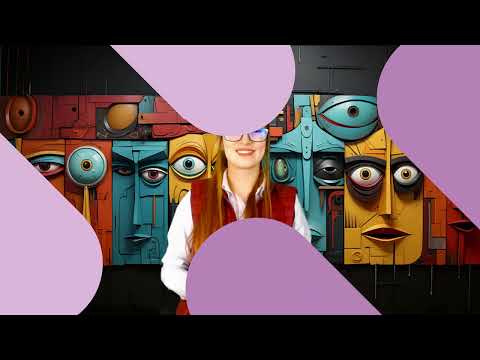
Dadaism emerged as a reaction to World War I, characterized by its anti-war, anti-nationalism, and anti-establishment sentiments. Artists sought to create a new universe devoid of the chaos of their time, using absurdity and randomness in their works to challenge traditional art forms and societal norms.
Dadaism is a fascinating art movement that emerged during the tumultuous period of World War I. This blog post delves into the origins, principles, and impact of Dadaism, shedding light on why it remains a significant part of art history.
Dadaism began around 1915-1916 when a group of artists from various parts of Europe sought refuge in Switzerland, a neutral country during the war. The war had created an environment that was not conducive to artistic expression, leading these artists to find a safe haven where they could explore new ideas.
The term "Dada" itself is believed to have originated from the babbling of a child, reminiscent of the first words a baby might utter. Some suggest it was derived from a German-French dictionary, where "dada" refers to a hobby horse, a toy that children play with. This seemingly nonsensical name reflects the movement's core philosophy of absurdity and randomness.
The artists involved in Dadaism were disillusioned by the horrors of war and sought to oppose it through their art. Their goal was to create a new universe that rejected the chaos and violence of the existing world. Dadaism was characterized by its:
These artists aimed to dismantle established norms and conventions in art and society, advocating for a radical rethinking of what art could be.
Dada artists employed various techniques to express their ideas, often using randomness and absurdity in their works. One notable method involved taking a newspaper, cutting out words, and randomly assembling them to create poetry. This approach exemplified the Dada belief that anything could be art, regardless of its origin or meaning.
Dadaism influenced a wide range of artistic disciplines, including painting, writing, and music. Artists like Marcel Duchamp created provocative works that challenged traditional notions of art. One famous example is Duchamp's "Fountain," a urinal presented as art, which sparked outrage and debate about the nature of art itself.
The Dada movement was not just about creating art; it was a philosophical stance against the societal norms of the time. The artists involved sought to prove that everything could be art, and nothing was beyond the realm of artistic expression. Their work questioned the very foundations of art and society, making Dadaism a precursor to later movements such as Surrealism and Abstract Expressionism.
In conclusion, Dadaism was a revolutionary movement that emerged from the chaos of World War I, characterized by its rejection of traditional art forms and societal norms. By embracing absurdity and randomness, Dada artists sought to create a new universe free from the constraints of their time. Understanding Dadaism allows us to appreciate the profound impact it has had on the evolution of modern art and its ongoing relevance in contemporary discussions about the nature of creativity and expression.