This blog post explores Marcel Duchamp's Dada artwork 'In Advance of a Broken Arm,' examining its significance in challenging traditional notions of art, the role of the artist, and the art market. Through a discussion between art historians, we uncover the complexities of Duchamp's ready-mades and their impact on contemporary art.
During the tumultuous years of World War I, a revolutionary art movement known as Dada emerged. This movement, characterized by its anti-art stance, sought to challenge and redefine the very essence of art in a world engulfed in chaos. One of the pivotal figures of Dada was Marcel Duchamp, who introduced the concept of ready-mades—ordinary objects elevated to the status of art through the artist's designation.
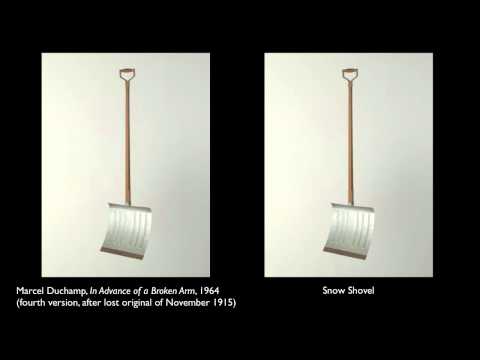
Duchamp's ready-mades included both assisted ready-mades, where he combined two existing objects, and pure ready-mades, which were everyday items presented as art. A notable example is his piece titled In Advance of a Broken Arm, which features a snow shovel. This work exemplifies Duchamp's intent to provoke thought about the nature of art and its valuation.
When discussing In Advance of a Broken Arm, it becomes clear that the piece is not merely a snow shovel. Duchamp took an ordinary object from a hardware store and re-contextualized it within an artistic framework. This act of relocation and reframing challenges viewers to reconsider their perceptions of art. The title itself, In Advance of a Broken Arm, adds a layer of absurdity and invites speculation about its meaning.
The discussion surrounding Duchamp's work often touches on the cynicism inherent in his approach. By presenting a mundane object as art, Duchamp seemed to mock the art establishment and its values. This act raises questions about the nature of artistic merit and the arbitrary distinctions made by the art market. For instance, if Duchamp's snow shovel were to be auctioned, it could fetch millions, while a similar shovel purchased from a store would be worth significantly less, despite their physical indistinguishability.
Duchamp's work signifies a shift in the understanding of art from a focus on craftsmanship to an emphasis on concept. He argued that the value of art lies not in the physical object itself but in the ideas and narratives it evokes. This perspective aligns Duchamp's work with poetry, where the emotional and intellectual impact is paramount, rather than the material aspects.
The title In Advance of a Broken Arm serves to heighten the absurdity of the piece. It prompts viewers to engage with the work on a deeper level, questioning why such a mundane object deserves a grand title. This absurdity is central to Duchamp's practice, as he aimed to challenge conventional narratives and provoke critical thinking about art.
Marcel Duchamp's In Advance of a Broken Arm remains a significant work in the discourse of contemporary art. It not only challenges traditional notions of what constitutes art but also critiques the mechanisms of the art market. Duchamp's legacy lies in his ability to provoke thought and discussion, making him a pivotal figure in the evolution of modern art. Through his ready-mades, he opened the door for future artists to explore the boundaries of creativity and the definition of art itself.