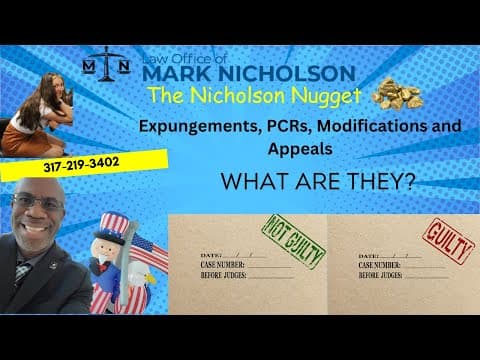
In the aftermath of a criminal conviction, individuals often find themselves navigating a complex legal landscape. Understanding the options available can be crucial for those seeking to clear their records or challenge their convictions. This blog post will break down four key legal concepts: expungements, post-conviction relief (PCR), modifications, and appeals.
What is an Expungement?
An expungement is a legal process that allows individuals to remove certain convictions or arrests from their criminal record. Here are the key points regarding expungements:
- Eligibility: Not all convictions are eligible for expungement. In Indiana, specific crimes can be expunged after a designated waiting period. Additionally, if someone is arrested but not convicted, those records can also be expunged.
- Types of Cases: Expungements can apply to cases that were dismissed, where the individual was found not guilty, or where the prosecutor chose not to press charges despite an arrest.
- Impact on Records: Once an expungement is granted, the record is removed from the Chronological Case Summary (CCS), making it inaccessible to the public. However, some records may still show that they have been expunged, depending on the crime's nature.
Post-Conviction Relief (PCR)
Post-conviction relief is a legal remedy available to individuals who have been convicted of a crime and wish to challenge that conviction after the appeal process has been exhausted. Here are the main aspects of PCR:
- Grounds for PCR: Individuals can seek PCR on several grounds, including:
- Ineffective Assistance of Counsel: Claiming that their attorney did not provide adequate representation during the trial.
- Newly Discovered Evidence: Presenting new evidence that could potentially exonerate the individual, such as DNA evidence or a confession from another party.
- Actual Innocence: Demonstrating that the individual is actually innocent of the crime for which they were convicted.
- Process: PCR is typically pursued after an appeal has been denied, serving as a last resort for those seeking to overturn their conviction.
Modifications
Modifications refer to the process of altering a criminal sentence after a conviction. Here’s what you need to know about modifications:
- Eligibility: To file for a modification, the individual must have been convicted of a crime. Modifications are generally not applicable if the conviction resulted from a plea agreement, as these agreements are treated like contracts.
- Filing a Motion: Individuals can file a motion with the court to request a modification of their sentence. The success of such a motion depends on the specifics of the case and the reasons for the modification.
Appeals
Appeals are one of the first steps individuals can take after a conviction. Here’s an overview of the appeals process:
- Right to Appeal: In Indiana, individuals have a constitutional right to appeal their conviction. This right applies to both criminal and civil cases.
- Process: The appeal is typically filed with the Indiana Court of Appeals. If the appeal is denied, individuals may request a transfer to the Indiana Supreme Court, although this court accepts only a limited number of cases.
- Scope of Appeal: Individuals can appeal the judge's decision or the jury's verdict if they believe there were errors in the trial process that affected the outcome.
Conclusion
Navigating the legal options available after a conviction can be daunting. Understanding the differences between expungements, post-conviction relief, modifications, and appeals is essential for anyone looking to clear their name or challenge a conviction. Each option has specific eligibility criteria and processes, and individuals are encouraged to seek legal advice to explore their rights and potential paths forward. For more detailed information, individuals can visit legal resources or consult with a qualified attorney.