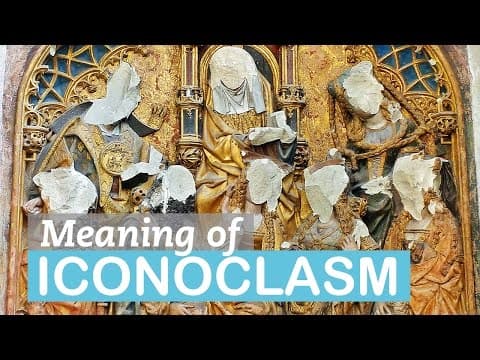
Iconoclasm, the destruction of religious images for political or religious reasons, has significant historical implications. It not only results in the loss of art but also serves as a powerful statement against established beliefs, often leading to violence and intolerance.
Iconoclasm, derived from the Greek term meaning "image breaking," refers to the destruction of religious icons and other significant images or monuments, often driven by religious or political motives. This phenomenon has been a recurring theme throughout history, with profound implications for art and culture.
Iconoclasm involves the deliberate destruction of images, particularly those that are revered in various religious contexts. Individuals who engage in or support iconoclasm are known as iconoclasts. In contrast, those who venerate these images are referred to as iconolaters by iconoclasts. The motivations behind iconoclasm can vary, but they often stem from disputes within or between different religious sects.
Throughout history, there have been numerous instances of iconoclasm:
The consequences of iconoclasm extend beyond the mere destruction of art. Here are some key impacts:
The destruction of religious images results in a significant loss of cultural heritage. These artworks provide valuable insights into the past, and their obliteration means that future generations miss out on opportunities to learn from them.
Desecrating an image sends a powerful message. The act of prohibiting and damaging religious imagery is not just a literal act of destruction; it symbolizes a broader assertion of power. For instance, removing the face of a pharaoh is akin to erasing that figure from history, signaling a rejection of the old ways and a dismissal of the past.
Iconoclasm can lead to violent acts, including the destruction of places of worship. It often cultivates an atmosphere of intolerance towards different ways of worship, as it embodies a rejection of established beliefs and practices.
Iconoclasm is a complex and multifaceted phenomenon that has shaped art history and cultural narratives throughout time. The next time you encounter a statue with a scratched face or a missing head, consider the deeper implications of such damage. It may tell a story of conflict, power, and the ongoing struggle between differing beliefs. Understanding iconoclasm allows us to appreciate the fragility of cultural heritage and the powerful messages conveyed through the destruction of art.