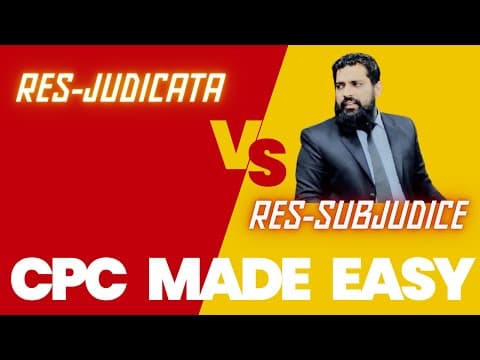
This blog post explores the concepts of Res Judicata and Res Sub Judice as outlined in Sections 10 and 11 of the Code of Civil Procedure. It explains their definitions, implications, and the conditions under which they apply, emphasizing the importance of finality in litigation and the prevention of repetitive lawsuits.
In the realm of civil procedure, the concepts of Res Judicata and Res Sub Judice play a crucial role in ensuring the efficiency and finality of legal proceedings. This blog post delves into these concepts as outlined in Sections 10 and 11 of the Code of Civil Procedure (CPC), providing a comprehensive understanding of their definitions, implications, and the conditions under which they apply.
Res Judicata, a Latin term meaning "a matter judged," refers to the principle that a final judgment by a competent court on a matter is conclusive and prevents the same parties from litigating the same issue again. This principle is essential for maintaining the integrity of the judicial system and preventing the abuse of legal processes.
Res Sub Judice, meaning "a matter under judgment," refers to the principle that a matter currently pending before a court cannot be litigated in another court. This principle aims to avoid conflicting judgments and ensures that the same issue is not tried in multiple forums simultaneously.
Section 10 of the CPC addresses the situation where two or more suits are pending in different courts regarding the same cause of action. It states that no court shall proceed with the trial of any suit in which the matter is already pending before another competent court. This provision aims to prevent duplicative litigation and conserve judicial resources.
Section 11 of the CPC deals with the principle of Res Judicata. It states that no court shall try any suit or issue that has already been decided by a competent court. This section emphasizes the importance of finality in litigation and prevents parties from re-litigating issues that have already been resolved.
While both sections aim to prevent repetitive litigation, they apply in different contexts:
Understanding the principles of Res Judicata and Res Sub Judice is essential for legal practitioners and parties involved in civil litigation. These principles not only promote judicial efficiency but also uphold the integrity of the legal system by preventing the same issues from being litigated multiple times. By adhering to these principles, courts can ensure that justice is served while minimizing unnecessary legal disputes.