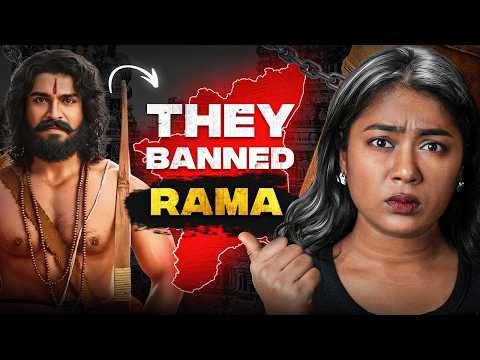
This blog explores the historical and cultural reasons behind Tamil Nadu's unique relationship with Lord Rama, contrasting local beliefs with national narratives. It delves into the influence of political ideologies, particularly the legacy of Periyar, and how these have shaped perceptions of Rama and Ravana in Tamil culture.
The celebration of Ram Leela, which marks the victory of good over evil, is a cherished tradition across India. However, Tamil Nadu presents a stark contrast, where the burning of Lord Rama's effigies has become a symbol of protest. This blog post aims to unravel the reasons behind this unique sentiment in Tamil Nadu, exploring historical, cultural, and political dimensions.
In most parts of India, Ram Leela is celebrated with great enthusiasm, where effigies of Ravana are burned to signify the triumph of Lord Rama. Yet, in Tamil Nadu, the narrative diverges significantly. Here, some groups have taken to burning effigies of Lord Rama instead, referring to their events as Ravana Leela. This phenomenon raises a crucial question: why does Tamil Nadu harbor such sentiments against Lord Rama?
To understand the current sentiments, we must delve into the historical context. The tension between the perception of Lord Rama and the people of Tamil Nadu did not arise overnight. It has roots in the political landscape of Tamil Nadu, particularly influenced by the ideologies of Periyar E.V. Ramasamy, a prominent social reformer.
Periyar was a powerful speaker and a fearless reformer who sought to challenge the injustices of caste and social inequality. His ideology questioned not just religion but also the very foundations of Hinduism, which he believed was created by Brahmins to maintain control over others. He viewed the Ramayana as a political narrative where Aryans from the North defeated the Dravidians of the South, portraying Ravana not as a villain but as a king who was unfairly demonized by Northern culture.
A pivotal moment occurred in 1971 during a public rally organized by Periyar's followers. They carried a ten-foot wooden statue of Lord Rama and publicly humiliated it by beating it with slippers before setting it on fire. This act was not merely a protest against caste but a direct affront to the faith itself, shocking the nation and igniting widespread outrage.
The incident forced political leaders, including Chief Minister M. Karunanidhi, into a dilemma. While he could not openly oppose Periyar, he also needed to address the hurt sentiments of the people. The backlash from this event was significant, leading to a media frenzy and a national conversation about the relationship between Tamil Nadu and Hindu deities.
In Tamil Nadu, Ravana is often glorified in literature and culture, seen as a complex character rather than a mere villain. This perspective is rooted in the belief that he was a learned king and a devotee of Shiva. The portrayal of Ravana as a hero in Tamil cinema and literature has further entrenched this view, leading to a cultural identity that sometimes rejects the North Indian narrative surrounding Rama.
The media has played a significant role in amplifying the narrative that Tamil Nadu rejects Lord Rama. However, this portrayal often overlooks the nuanced reality of Tamil sentiments. While small groups may engage in provocative acts, the broader Tamil population does not necessarily support these actions. Many Tamils respect Lord Rama and have a deep-rooted connection to him, as evidenced by the numerous temples dedicated to him across the state.
Despite the political theatrics, the reality is that Tamil Nadu has a rich tradition of worshipping Lord Rama. There are over 200 temples dedicated to him, many of which are over a thousand years old. The local expressions of devotion may differ, but they do not equate to hatred. Instead, they reflect a complex relationship shaped by historical grievances and cultural identity.
The Tamil version of the Ramayana, written by the poet Kamban, presents Lord Rama not just as a prince but as the embodiment of dharma and righteousness. Kamban's portrayal of Ravana adds depth to his character, emphasizing his intelligence and valor while still upholding Rama as the hero. This literary tradition showcases the respect for Rama within Tamil culture, countering the narrative of rejection.
The relationship between Tamil Nadu and Lord Rama is multifaceted, influenced by historical events, political ideologies, and cultural narratives. While some political groups may use provocative actions to gain attention, they do not represent the sentiments of the entire state. The reality is that Tamil Nadu has always held a place for Lord Rama in its heart, blending devotion with a critical examination of cultural narratives. Understanding this complexity is essential to grasp the true essence of Tamil Nadu's relationship with Lord Rama, which is far from the simplistic portrayal often seen in national media.