This article explores the various remedies available to creditors when debtors fail to fulfill their obligations, including specific and generic obligations, obligations to do, and violations of agreements, as outlined in the New Civil Code of the Philippines.
In this third part of our series on the nature and effect of obligations, we delve into the remedies available to creditors when debtors fail to perform their obligations. Understanding these remedies is crucial for both creditors and debtors to navigate their rights and responsibilities effectively.
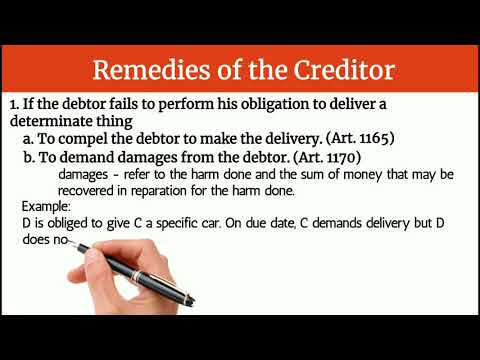
When a debtor fails to deliver a specific or determinate thing, the creditor has two primary remedies:
Legal References: Article 1165 and Article 1117 of the New Civil Code of the Philippines.
Example: If debtor D is obliged to deliver a specific car to creditor C on a due date and fails to do so, C can compel D to deliver the car and also demand damages for the delay.
In cases where the debtor fails to deliver a generic thing, the creditor's remedies include:
Legal References: Article 1165 and Article 1170.
Example: If D is supposed to deliver five sacks of rice to C and fails to do so, C can procure the rice from another source at D's expense and also demand damages.
When a debtor fails to perform an obligation to do, or performs it poorly, the creditor has the following remedies:
Legal References: Article 1167 and Article 1170.
If the debtor fails to perform the obligation or contravenes the terms:
If the debtor performs the obligation but does so poorly:
If the debtor does something that has been expressly forbidden, the creditor can:
Legal Reference: Article 1168.
Example: If B enters into a contract with D that forbids D from constructing a fence between their properties and D violates this agreement, B can demand the removal of the fence at D's expense and also seek damages.
Understanding the remedies available to creditors in various scenarios of non-performance is essential for enforcing obligations effectively. Whether dealing with determinate or generic things, obligations to do, or violations of agreements, creditors have specific rights that can be exercised to ensure compliance and seek reparations for any harm caused by the debtor's failure to perform. This knowledge not only protects the interests of creditors but also clarifies the responsibilities of debtors in fulfilling their obligations.