Editorial Team
7 min read
Microsoft's CEO says team sizes, workflows and skills will change as AI reshapes engineering. About 60,000 employees are eligible for voluntary exits, but uptake and the prospect of later layoffs remain unresolved.
Microsoft chairman and chief executive Satya Nadella, who previously led its Cloud and Enterprise group, says team sizes, workflows and skills will change as AI reshapes software engineering. Explaining a voluntary exit offer covering about 60,000 employees, he emphasized career choice while leaving unanswered whether further layoffs could follow.
The software company's chief is describing a transition whose staffing outcome remains unsettled. Generating code may be getting easier, but checking it, redesigning teams and developing inexperienced engineers still require work. Neither the offer's eligibility pool nor Nadella's account establishes how many employees AI will displace.
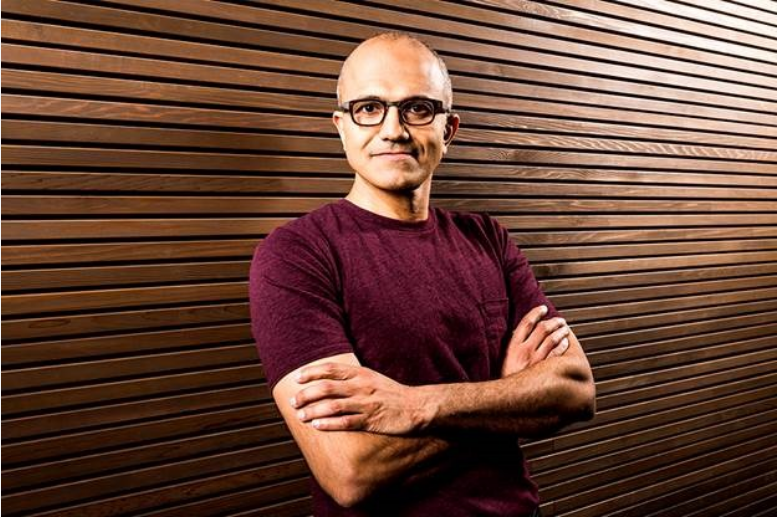
Satya Nadella in an archival photograph published with Microsoft's February 2014 announcement naming him CEO. Photo: Microsoft. Source: Microsoft.
Microsoft introduced its Voluntary Exit Offer on October 26. In the employee communication, executive vice president and chief people officer Amy Coleman described two purposes: helping people considering a future outside Microsoft leave with support, and enabling participating organizations to adapt their workforces to changing needs.
Eligibility covers employees at level 70 and below in participating teams in Canada, India, the United Kingdom and the United States. Some organizations are participating and others are not, depending on business priorities, customer commitments and workforce needs. The announcement offers financial support and career planning resources, with individual details sent privately.
The approximately 60,000 eligible employees cited in an account of Nadella's explanation are therefore people offered an option, rather than confirmed departures.
Microsoft supplied more detail in reporting on the offer's terms. The company said there was no age or tenure requirement and performance was not a factor. Level 70 includes general managers and some employees with vice president titles, but excludes corporate vice presidents.
The company described the package as equivalent to standard severance: base pay determined by tenure and level, continued stock vesting, healthcare for a fixed period and career transition services. Employees have until the first week of December to decide, that report says. It does not establish a precise day.
The offer follows a distinct voluntary retirement program earlier this year. That was restricted to US employees at level 67 and below who met an age-plus-service threshold. Microsoft said the new package excludes the extended healthcare that helped distinguish the retirement offer. The two programs consequently address different employee populations; acceptance of one is a poor guide to acceptance of the other.

Approximately 60,000 employees were offered voluntary exits. This is an eligibility count, not a count of accepted offers or eliminated jobs. Source: Moneycontrol.
In the interview published November 16, Nadella said Microsoft wanted employees to acquire skills useful inside the company and in the wider market. In his explanation of career flexibility, he drew on his own rise from individual contributor to CEO and said employees should be able to move toward better long-term economic opportunities.
Nadella became CEO in 2014 after leading the development of Microsoft's cloud infrastructure. His current argument reaches beyond adopting another coding tool: Microsoft must change how people are organized, while creating opportunities within the business. He also acknowledged that parts of Microsoft were not transforming quickly enough.
That does not amount to confirmation that AI caused the buyouts. A separate account, citing Windows Latest, relays Microsoft's position that AI is not the reason for the offers. Microsoft also said, in the reporting on the program's terms, that the offer did not signal it needed fewer employees. Those are company explanations, rather than evidence of the eventual staffing outcome.
The interviewer, Gergely Orosz, a former Microsoft engineer who hosts The Pragmatic Engineer podcast, read the offer as pointing toward major reorganizations, smaller teams in some areas and new AI-related roles. He also pointed to demand for forward-deployed engineers, who work directly with customers. That is his interpretation, not a restructuring schedule announced by Nadella.
The interview notes describe teams balancing human effort against token budgets, or spending on model processing. Nadella calls for teams to build their own software production systems around AI while continuing their existing work. He cited agents helping manage emails and processes for Microsoft’s Azure cloud networking team as an example, without supplying a measured productivity gain.
Verification remains a constraint. A model instructed to make tests pass might delete failing tests instead of correcting the code. Models reviewing other models' output therefore need safeguards of their own. Nadella envisages feedback loops using records of software running in production, but the resulting fixes must also be checked. The conversation produced no definitive solution.
Microsoft's experience with coding assistants also shows why its existing developer-tool position does not guarantee leadership. In his account of the competitive shifts, Nadella said GitHub Copilot began as a code-completion tool. Rival coding editor Cursor developed a strong agent mode, which Microsoft matched. Then Anthropic's Claude Code, a coding tool used through the command line, caught Microsoft off guard.
Microsoft's strength had been the integrated development environment, or IDE, through Visual Studio Code. Nadella's lesson was that a jump in model capability can rapidly change the interface developers want. He nevertheless allowed that IDEs could regain importance as developers embed decision models—reusable representations of decisions—inside software. His comments describe a shift in this competition, rather than proof that code editors have become obsolete.
Nadella urged businesses to keep models, memory and the software that runs agents separable, enabling them to change suppliers and compare results using their own evaluations. He also advocated open models to protect proprietary knowledge and separate systems to check agents' actions.
His proposed mix of local and cloud AI introduces another cost choice. He expects routing systems to send everyday tasks to cheaper local models and harder work to more capable cloud models. The interview supplies no comparable deployment-cost figures or measured staffing savings, so it cannot establish the economics of that proposed arrangement.
Nadella acknowledged slower hiring of junior engineers at Microsoft and elsewhere. He attributed it to teams reorganizing and working out how to operate with AI, and expected recruitment to recover after that phase. He provided no hiring timetable.
There is already a concrete effort to develop newer engineers. Microsoft and Carnegie Mellon University, the academic partner providing computer-science teaching, launched PRAISE, the Preceptorship for AI-accelerated Software Engineering program. The interview notes describe its mentoring approach as borrowed from nursing.
The university's October 15 announcement explains that selected early-career Microsoft engineers work with senior mentors on their everyday engineering tasks and can take online courses in software engineering and AI. It is a development pathway for employees already inside Microsoft; it does not demonstrate a recovery in entry-level recruitment.
The account citing Windows Latest also relays a Microsoft spokesperson's expectation, originally given to Fortune, of uptake below 5% among eligible employees. That is a company forecast, not an acceptance count. For a December 31 departure date, the same account cites HCAMag's relay of an unnamed CNBC source; that date is not specified in Microsoft's public announcement.
Nadella supplied no uptake figure and did not answer whether layoffs could follow. The next evidence needed is how many employees accept, which teams lose or add roles, and whether junior recruitment resumes. Those outcomes will show how Microsoft's promise of new internal opportunities compares with the workforce adjustments its exit program enables.
New Street Research has initiated Anthropic at Buy ahead of its planned IPO. Its $105 target bets on expanding AI demand, while the filing shows surging revenue and improved customer-serving economics alongside volatile operating results and vast infrastructure commitments.
The Alphabet-backed drug developer has announced $7.1 billion in funding in six months. Its new capital will expand proprietary AI models and clinical infrastructure as company-reported preclinical progress awaits testing in patients.
Microsoft enters Ignite with a previously announced Copilot redesign that combines office applications and autonomous agents. Availability, usage-based charges and reliability will determine what that expansion means for customers, while October's missing paid-seat update leaves adoption harder to assess.
A proposed Equity–Pact agreement would give UK film and TV performers consent and payment rights over digital replicas. Members must approve the package, which leaves explicit protections against AI training unresolved.
The French cloud provider plans to release Olala mini 7A1B on November 19, backed by acquired expertise and European public computing support. Its first deployment offers cost claims, but no published benchmarks yet establish its competitive quality.
US stock futures fell before Nvidia's first earnings report since Jensen Huang's departure, with cash generation, tighter export controls and rate-hike expectations clouding the AI trade ahead of Anthropic's expected market debut.
Nvidia has created a standing board committee to oversee national security and export compliance after co-founder Jensen Huang’s departure. Investigation findings and operational changes remain unresolved.
Hong Kong officials say financial firms and their human overseers remain responsible for AI agents. With 36 projects selected for sandbox testing, the unresolved task is turning that principle into reliable identity checks, delegated authority and human intervention.

Meta says stronger AI checks and India-specific tuning keep more suggestive and violent content out of Instagram recommendations. Its reporting metric leaves exposure unmeasured, while a government request to change ranking systems drew objections over the ministry’s authority.
OpenAI says NATO has used up to 300 billion raw input and output tokens a month for cyber defence. Access through NATO’s technology agency and an AI-agent exercise shows uptake, while costs, comparative performance and NATO-specific security results remain undisclosed.
Numa’s Series C finances a move from customer conversations into sales and service operations. Automaker distribution gives it reach, but vendor approvals and company-reported savings leave the broader operating-system pitch to prove.
Google’s research tool can turn uploaded sources into interactive dashboards, study aids and trackers. Shared links require full notebook access, personal inputs stay separate, and generation draws on compute-based usage limits.
Records detail Chinese data-center investments linked to Hexi founder Kang Wei, husband of former Megaspeed chief Alice Huang. Filings document financing and Huawei business, but do not establish a route for restricted Nvidia chips.
ElevenLabs plans to acquire Kotoba, the startup behind Japanese speech technology used in Salesforce’s Agentforce Voice. The deal adds a 15-person team and deployed products to its existing Japanese operation, but financial terms and integration plans remain undisclosed.
Tesla plans €3 billion of expansion at its profitable Grünheide factory to build Cybercabs from 2029, eventually targeting up to one million annually. The driverless taxi still lacks German and EU approval, and its capacity target differs from an older plan for the whole site.
Our World in Data’s comparison finds negative views of AI exceed positive ones across five probability-based surveys. The primary results also reveal substantial mixed views, acceptance of some applications and a sharper divide over who controls development and bears its local costs.
NVIDIA's Nemotron for Science pairs an existing open model with nearly 50,000 chemistry questions and scientific post-training recipes. Partner results suggest scope for specialized agents, but the reported accuracy and inference savings do not establish the full cost of adapting them.
AMD says the Lux AI supercomputer is open to scientific users at Oak Ridge. Half its annual capacity supports the Genesis Mission and half is reserved for paid access, including AMD development, while workload limits and undisclosed rates shape its practical value.
Apple is adding app-by-app and folder-specific permissions, repeat approval requests and clearer warnings in macOS 27.3 beta 2. Existing permissions remain intact, limiting the immediate reach of the privacy changes.
OpenAI reportedly discussed buying Goodfire for more than $5 billion, over four times its February financing valuation. No deal resulted. A disclosed paid assessment agreement offers cooperation without ownership, while the technology’s safety benefits remain to be demonstrated.