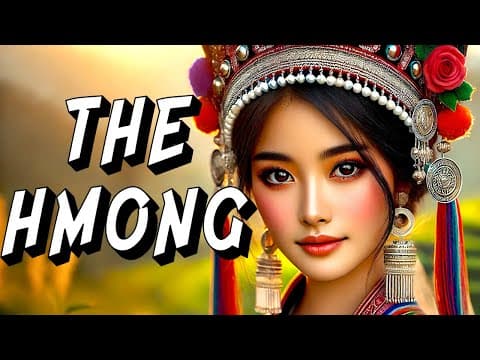
The Hmong people, with origins tracing back to ancient China, have a rich and resilient culture marked by survival against persecution. This blog post explores 15 fascinating facts about their history, social structure, traditions, and the challenges they faced, particularly during the Vietnam War and their subsequent migration to the United States.
Shrouded in the mists of ancient China, the Hmong people emerged as one of the region’s most enigmatic and resilient cultures. Their origins stretch back thousands of years, to a time before written history, when they inhabited rugged hills and remote valleys. This blog post delves into 15 fascinating facts that reveal the incredible saga of the Hmong people, marked by defiance, survival, and a profound connection to nature and spirituality.
The Hmong trace their origins to the Yellow River, where they resisted powerful dynasties. They are one of the oldest ethnic groups in China, historically part of the larger Miao group. Over time, the Hmong developed a distinct identity, maintaining their unique customs, language, and social structures despite external influences. Their independent spirit often led to conflicts with Chinese authorities, particularly during the Ming and Qing Dynasties, prompting their migration to Southeast Asia in search of refuge.
Hmong society is structured around a clan system, which plays a significant role in social organization. There are approximately 18 major clans, each identifiable by its unique surname. These clans act as extended families, providing support in conflict resolution, marriage, and social obligations. Marrying outside one’s clan is a crucial tradition, strengthening alliances and ensuring genetic diversity. Clans also function as a form of governance, with elders guiding decision-making and mediating disputes.
Centuries of persecution led the Hmong to migrate to remote mountains in Southeast Asia. Their refusal to fully assimilate into Han Chinese culture resulted in harsh measures from Chinese authorities, including forced labor and military campaigns. By the 18th and 19th centuries, many Hmong migrated southward into Laos, Thailand, Vietnam, and Myanmar, where they found relative freedom to practice their cultural traditions.
The Hmong excelled at slash-and-burn farming, adapting to rugged terrains. Traditionally subsistence farmers, they practiced agriculture suited to their mountainous environment, growing crops like rice and corn. This labor-intensive method allowed them to sustain their families in areas where conventional farming was impractical. Additionally, they raised livestock, which played a vital role in their diet and cultural practices.
Hmong hunters track small game by moonlight, relying on skill, silence, and instinct. Night hunting is a time-honored tradition that fosters community bonds. Hunters venture into dense forests at night, using their knowledge of the land and keen senses to track prey. This communal activity reinforces cultural ties and preserves important survival skills.
Hmong shamans connect the physical and spiritual worlds through ancient rituals. Known as txiv neeb, shamans are believed to communicate with spirits, heal the sick, and ensure harmony between realms. They conduct rituals involving animal sacrifices and offerings to ancestors, serving as spiritual leaders who mediate between their communities and unseen forces.
The Hmong use ancient herbal remedies, combining natural healing with spiritual practices. Healers possess extensive knowledge of local plants and their medicinal properties, crafting remedies for various ailments. This holistic view of health sees physical, mental, and spiritual wellness as interconnected, with many Hmong continuing to rely on traditional remedies even in diaspora communities.
Stories and songs have passed down Hmong history and values for generations. Before the creation of a written script, storytelling was the primary means of education and cultural preservation. Narratives often included tales of ancestors and moral lessons, connecting younger generations to their heritage and survival skills.
The qeej is a sacred instrument believed to guide souls to the afterlife during rituals. This bamboo wind instrument is played at funerals and ceremonial events, with its melodies considered a form of language that conveys messages from ancestors. Learning to play the qeej is a revered skill, deeply rooted in Hmong beliefs about life and death.
Traditional Hmong clothing is rich with symbolic meaning and heritage. Every detail, from colors to patterns, holds cultural significance. Women’s clothing often features elaborate designs representing aspects of nature and spiritual meaning. These garments serve as a physical representation of Hmong history and values, connecting wearers to their ancestors.
The Hmong New Year, known as Noj Peb Caug, celebrates the harvest and honors ancestors with music and dance. This important celebration marks the end of the harvest season and includes traditional activities such as singing, dancing, and feasting. It serves as a time for communities to reaffirm cultural bonds and reflect on their shared history.
The Hmong secretly fought alongside U.S. forces in Laos during the Vietnam War. They were key allies of the United States, disrupting North Vietnamese supply lines and providing intelligence. However, after the U.S. withdrawal, many Hmong faced persecution, leading to a mass exodus to refugee camps in Thailand.
Hmong women’s story cloths document war, life, and culture in vivid textiles. These narrative artworks evolved from decorative pieces into vital mediums for preserving history and personal experiences, illustrating the impact of war and the journey to refugee camps. They also became a source of income for many women.
After the Vietnam War, many Hmong refugees resettled in the United States, establishing vibrant communities. Despite initial challenges, they have maintained their cultural traditions while contributing to American society. The largest Hmong-American communities are in California, Minnesota, and Wisconsin.
The Hmong language, once only oral, now has two distinct dialects and a written form. The Romanized Popular Alphabet (RPA) was developed in the mid-20th century, allowing for the documentation of the language. While some Hmong people still rely on oral transmission, the written form has become standard in diaspora communities.
Throughout their long history, the Hmong have demonstrated extraordinary resilience and adaptability in the face of adversity. From centuries of persecution in China to their migration across Southeast Asia and resettlement in the United States, they have continually found ways to preserve their unique culture and identity. Their remarkable ability to balance tradition with change remains a testament to the Hmong’s unwavering spirit.