Agent loops are AI systems designed to autonomously reason, act, observe, and iterate towards a defined goal until a stop condition is met. This article explains the concept of agent loops, their components, practical examples, and how to effectively implement them in workflows to enhance productivity without unnecessary complexity.
In the evolving landscape of AI, agent loops have emerged as a powerful paradigm for automating complex tasks. Instead of manually prompting coding agents, the focus has shifted towards designing loops that prompt agents to reason, act, observe, and iterate until a goal is achieved. This article delves into what agent loops are, why they matter, and how to effectively use them.
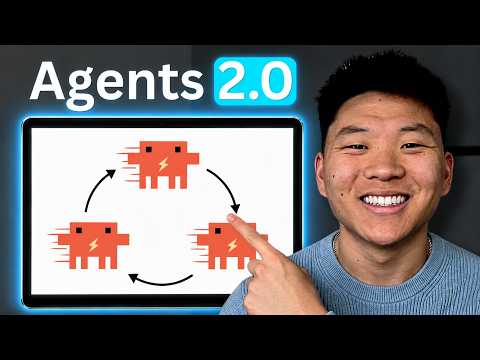
An agent loop is a recursive AI process consisting of three core components:
In essence, agent loops replace the human as the prompt engineer by designing systems that autonomously prompt and guide AI agents.
Two critical pillars define the effectiveness of an agent loop:
AI is rarely perfect on the first attempt. Typically, the quality of output improves with each iteration as feedback is incorporated. Agent loops automate this feedback and iteration process, allowing AI to improve outputs without constant human intervention.
For example, if a human attempts a task once and achieves 50% quality, they might improve it to 60% on the second try. An agent loop can automate this iterative improvement, potentially reaching 90-95% quality in fewer attempts.
There is a misconception that to be productive, one must have multiple agents running 24/7, orchestrating fleets of sub-agents. However, this is not always necessary or beneficial. Many tasks do not require continuous agent activity, and scaling prematurely can lead to bugs and inefficiencies.
Agent loops should be tailored to your specific use case. For some, running agents on a certain cadence or event-driven basis is more effective than constant operation.
An agent loop involves the AI:
Think of the agent as a smart intern who you assign a goal to, and who figures out the steps, checks their own work, and only reports back when the task is complete.
An agent was tasked to create YouTube thumbnails inspired by Mr. Beast's style. It:
This process took about 27 minutes and involved multiple versions of thumbnails improving over time. The scoring was somewhat subjective, highlighting the importance of defining objective stop criteria.
Another loop tasked an agent to build a spinning 3D plane using 3.js. The agent:
This loop took 37 minutes and produced a functional, though not perfect, 3D model.
An agent was asked to recreate the famous Abbey Road image using HTML and CSS without image generation. It:
Though the final output was not a perfect replica, the loop demonstrated effective verification and iteration.
Many tasks benefit from simple loops with one agent performing reasoning, acting, and observing. More complex workflows might involve multiple agents, such as a maker-checker system where one agent creates and another evaluates.
For example, video editing workflows can use loops to:
Agent loops are a powerful way to automate iterative tasks and improve AI output quality. However, they should be implemented thoughtfully, with clear goals and verification criteria tailored to your specific needs.
Not everyone needs complex multi-agent systems running 24/7. Often, a well-designed single-agent loop or a small team of agents is sufficient and more efficient.
Stay informed about developments in loop engineering, but adapt the concepts to your workflow and use case for the best results.
Agent loops represent a shift from manual prompting to designing intelligent systems that manage themselves, enabling higher productivity and better outcomes in AI-assisted work.