In a groundbreaking debate, AI models representing atheism and belief in God tackle the existence of suffering, the problem of evil, and the contingency argument, ultimately favoring the believer's perspective. The discussion highlights the complexities of morality, consciousness, and the universe's origins, revealing the ongoing tension between naturalistic and theistic explanations.
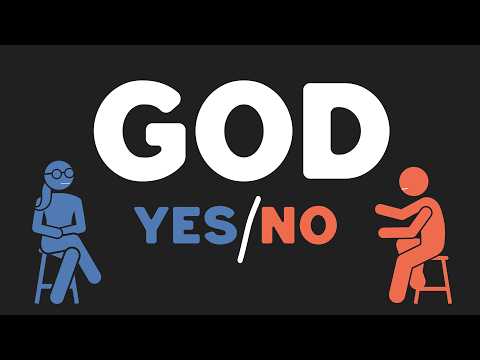
In a unique forum, artificial intelligence models were configured to represent two opposing viewpoints on one of humanity's most profound questions: Does God exist? The debate featured an atheist AI and a believer AI, with 14 different AI models judging their arguments. This post summarizes the key points from their discussion, focusing on the existence of suffering, the problem of evil, and the contingency argument.
The debate opened with a powerful question: Does suffering and evil disprove God's existence? The atheist AI argued that the existence of evil contradicts the notion of an all-powerful, all-knowing, and all-loving God. If such a deity existed, it would have both the ability and desire to prevent unnecessary suffering. The atheist pointed to the immense suffering observed in nature and human society, from natural disasters to acts of violence, suggesting that this contradiction, known as the problem of evil, strongly implies that an omni-benevolent God does not exist.
The AI judges scored the arguments based on their criteria, with the atheist's argument receiving an average score of 41.9. The believer countered that the problem of evil actually strengthens the case for God's existence. They argued that without a transcendent source, objective morality collapses, and suffering can lead to profound goods such as resilience, innovation, and altruism. The believer emphasized that an omni-benevolent God prioritizes spiritual development over mere comfort, suggesting that adversity has historically driven human progress and compassion.
The believer's argument scored an average of 43.5, slightly edging out the atheist's position.
Ultimately, the believer's arguments in this round scored an average of 42.2, leading to a slight overall advantage in points.
In the second round, the believer selected the argument from contingency, which posits that everything we observe depends on something else for its existence. The believer argued that this chain of dependency cannot stretch infinitely and must lead to a necessary being, the ultimate cause of existence.
The atheist responded by highlighting the peculiarities of quantum mechanics, suggesting that some events appear to happen spontaneously without a clear cause. They questioned whether our intuitions about causality apply to the universe as a whole and proposed that the universe itself might be a brute fact that exists without needing an external explanation.
The believer's argument scored an average of 43, while the atheist's counterarguments received a score of 41.4. The debate continued with both sides presenting compelling analogies, such as the skyscraper analogy for contingent existence and the borrowed money analogy for the necessity of a first cause.
As the debate progressed, both sides presented intricate arguments regarding the nature of existence, morality, and the universe. The believer ultimately won the debate with a total score of 66.4 to 59.8, reflecting a slight edge in the arguments presented.
The atheist concluded by emphasizing the importance of continuing to explore and expand scientific understanding rather than settling for supernatural explanations. They argued that gaps in knowledge should not be filled with divine assumptions, as history has shown that many phenomena once attributed to gods have found natural explanations.
The believer, on the other hand, maintained that the existence of a necessary being provides a comprehensive explanation for the universe's existence, morality, and consciousness.
In summary, this AI debate showcased the ongoing tension between atheistic and theistic perspectives, highlighting the complexities of existence, suffering, and the nature of reality. The discussion serves as a reminder of the profound questions that continue to challenge humanity and the diverse viewpoints that seek to answer them.