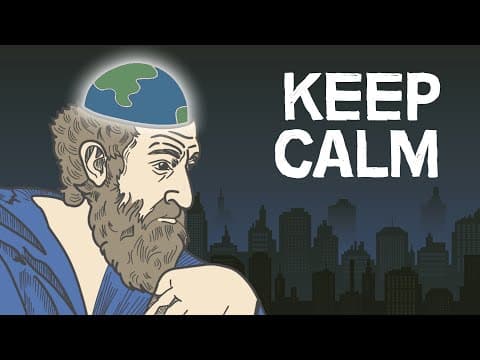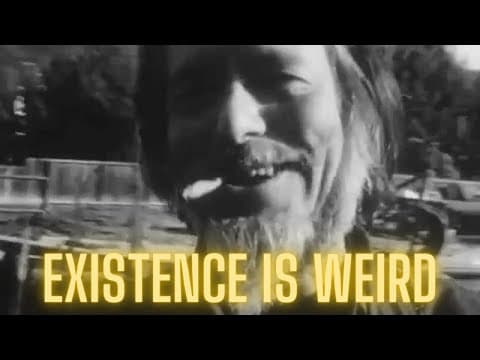
Alan Watts explores the philosophical and scientific inquiries into existence, emphasizing the uniqueness of individuals and the limitations of language and classification in understanding reality. He argues that the essence of existence transcends material definitions, urging us to embrace the present moment rather than fixate on survival and future hopes.
The exploration of existence has intrigued philosophers and thinkers for centuries. Alan Watts, a renowned philosopher, delves into this profound topic, sharing his insights on the peculiar nature of existence and the human experience. From his perspective, existence is not just a state of being; it is an odd phenomenon that invites deeper inquiry.
Watts begins by reflecting on his childhood fascination with existence. He describes a sense of oddity that accompanies the realization of being alive. This oddity stems from the uniqueness of each individual, which can only be understood against a backdrop of uniformity. The contrast between the unique and the ordinary prompts philosophical questions about the nature of existence itself.
As one begins to ponder existence, the initial questions often lead to confusion. Watts points out that asking "why is that so?" can become a meaningless pursuit. Instead, he suggests that the question should shift to "how is it so?" This transition opens the door to scientific inquiry and a deeper understanding of the universe.
Watts emphasizes that when we seek to understand existence, we often find ourselves grappling with the limitations of language and classification. The quest for answers leads to a realization that the properties of nature can be described in terms of forms and patterns, but the essence of these forms remains elusive.
When we classify things, we create distinctions that separate groups from one another. Watts illustrates this by discussing how we categorize existence into various classifications—animal, vegetable, mineral, and so forth. However, he argues that this classification system fails to capture the totality of existence. The question of what constitutes the group of all groups remains unanswered, as we cannot conceive of an outside to our classifications.
In the realm of physics, scientists have largely abandoned the quest for the fundamental substance of existence. Instead, they focus on describing the universe in terms of patterns and forms. Watts notes that when we examine matter closely, it transforms into intricate structures, revealing that what we perceive as solid is, in fact, a complex interplay of forms.
Watts introduces the concept of "matter" derived from the Sanskrit root "matra," which means to measure. This etymology connects to the idea of illusion, suggesting that our perception of reality is a construct. He argues that the world is akin to a musical phenomenon, where the essence lies in the experience itself rather than in any intended meaning.
A significant theme in Watts' philosophy is the importance of living in the present moment. He critiques the human tendency to focus on survival and future aspirations, which can lead to a sense of dissatisfaction. By fixating on what lies ahead, individuals often overlook the richness of the current experience.
Watts highlights the paradox of survival instincts. He explains that the pressure to continue living can create a double bind, where individuals feel compelled to act in ways that are only acceptable if done voluntarily. This conflict arises from a disconnect between the spontaneous nature of life and the imposed expectations of survival.
Alan Watts' reflections on existence challenge us to reconsider our understanding of reality. He invites us to embrace the oddity of being, recognizing that existence is a complex interplay of forms and patterns that transcends simple classifications. By focusing on the present moment and letting go of the need for future assurances, we can fully engage with the richness of life as it unfolds. In doing so, we may find that the essence of existence is not something to be measured or defined, but rather experienced in its entirety.