This blog post explores the significance of Birsa Munda's contributions to tribal communities in India, commemorating his 150th birth anniversary and the establishment of Tribal Pride Day. It discusses the ongoing initiatives to uplift tribal communities, the historical context of the Munda Rebellion, and the cultural importance of Sohrai painting.
In November 2024, we commemorate the 150th birth anniversary of Birsa Munda, a pivotal figure in India's tribal history. This occasion is marked by the celebration of Tribal Pride Day on November 15, as declared by the Indian government during the Azadi Ka Amrit Mahotsav in 2021. This blog post delves into the life and contributions of Birsa Munda, the significance of Tribal Pride Day, and the ongoing efforts to uplift tribal communities across India.
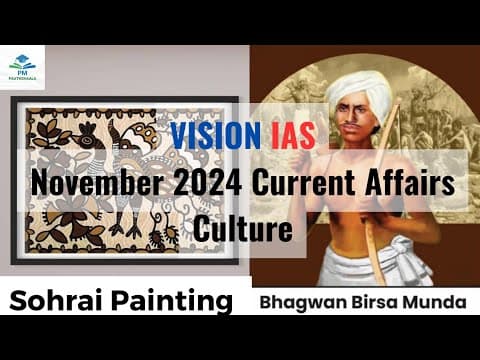
Birsa Munda was born in 1875 in Ulihatu, located in the Khunti district of Jharkhand. He belonged to the Munda tribe, which is part of the larger tribal community in the Chotanagpur Plateau region. Munda's early life was marked by his spiritual pursuits and his role as a preacher, where he sought to reform tribal society by promoting awareness about cleanliness and opposing alcohol consumption and witchcraft.
Birsa Munda's contributions to the tribal communities were monumental. He established a new sect called "Birsait" and advocated for the rights of tribal people against British colonial rule. His efforts culminated in the Munda Rebellion, which aimed to mobilize tribes against the oppressive policies of the British government, particularly the introduction of the zamindari system that displaced traditional land ownership.
The Munda Rebellion, also known as the Ulgulan or "Great Tumult," was a significant uprising against British colonial authority. Birsa Munda's leadership inspired many tribes across Jharkhand, Bengal, and Odisha to fight for their rights and establish an independent Munda Raj. The rebellion was fueled by various factors, including:
Despite the eventual suppression of the rebellion and Birsa Munda's death in custody in 1900, his legacy lived on. The uprising led to significant legislative changes, including the Chotanagpur Tenancy Act of 1908, which prohibited the transfer of land to non-tribals and abolished forced labor practices.
In honor of Birsa Munda's contributions, the Indian government has launched several initiatives aimed at improving the lives of tribal communities. One such initiative is the Prime Minister's Tribal Welfare Campaign, which focuses on vulnerable tribal households and aims to provide basic facilities such as housing and clean drinking water. The campaign has a budget allocation of 2414 crores and targets 75 Particularly Vulnerable Tribal Groups (PVTGs) across 18 states.
The 150th birth anniversary of Birsa Munda was celebrated with various events, including the Mati Ke Veer Padayatra in Chhattisgarh, which aimed to honor his legacy. Commemorative coins and postal stamps were also issued to recognize his contributions to tribal communities and the freedom struggle.
In addition to honoring Birsa Munda, the cultural heritage of tribal communities is also celebrated through art forms such as Sohrai painting. This traditional mural art from the Hazaribagh district of Jharkhand was gifted by Prime Minister Narendra Modi to the President of Russia during the BRICS summit. Sohrai painting utilizes natural pigments and simple tools to depict themes of nature, wildlife, and agrarian life, showcasing the rich cultural tapestry of tribal communities.
Birsa Munda's legacy continues to inspire efforts to uplift tribal communities in India. His contributions to the fight against colonial oppression and the preservation of tribal culture are celebrated through initiatives aimed at safeguarding their rights and heritage. As we reflect on his life and the ongoing struggles of tribal communities, it is essential to recognize their vital role in India's cultural and historical landscape.