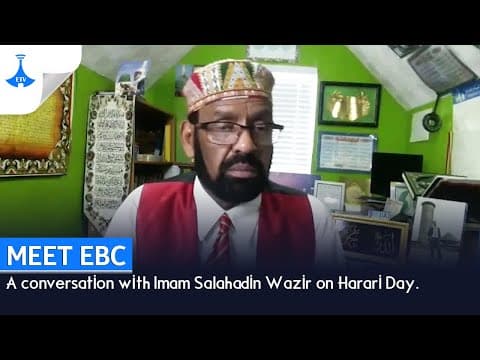
Imam Salahadin Wazir discusses the significance of Harari Day, the Harari diaspora's contributions, and a new project to build a museum honoring the companions of the Prophet Muhammad in Harar, Ethiopia.
In a recent conversation, Imam Salahadin Wazir shared insights about the 26th annual Harari Day, a celebration that brings together the Harari diaspora from around the world. This event, held in the historic city of Harar, Ethiopia, serves not only as a cultural gathering but also as a platform for reflection, networking, and community service.
The Harari Day is an annual event that has been celebrated for 26 years, with this year's festivities taking place in the city of Harar. Imam Salah, who has been involved in organizing this event, explained that the celebration includes a week-long series of sports and cultural activities, primarily sponsored by the Harari government. The event aims to foster connections among Hararis globally, allowing them to reflect on their heritage and strengthen their community ties.
Beyond socializing and cultural events, the Harari Day focuses on community service. For instance, Dr. Jamal from Australia provided free dialysis services to 20 individuals daily during the event. This highlights the commitment of the Harari diaspora to support their community, both locally and abroad.
The Harari diaspora is widespread, with many Hararis living outside the historic walls of Harar due to trade and commerce. Imam Salah noted that while the population within Harar has decreased, the Harari community remains influential and active wherever they reside. They are known for their strong connections and contributions to their localities, whether in Ethiopia or abroad.
Imam Salah emphasized that being a smaller community has its advantages. The Harari people are closely knit, often knowing each other by name, which fosters a sense of unity and collaboration. This cohesion allows them to mobilize quickly to address issues such as water shortages or poverty in their homeland.
The Harari diaspora is involved in various sectors, including business, government, and education. Many second-generation Hararis are becoming professionals and are deeply connected to their heritage. They frequently travel back to Harar, maintaining a strong sense of national pride and commitment to their community.
Imam Salah introduced an exciting new project aimed at building a museum in Harar that honors the companions of the Prophet Muhammad who migrated to Ethiopia. This museum will serve as a cultural and historical landmark, showcasing the contributions of Habasha to the Islamic faith and educating the public about this significant aspect of their history.
The museum will feature statues and exhibits dedicated to the companions of the Prophet, highlighting their migration and contributions to the region. Imam Salah stressed the need for greater awareness among Ethiopians, particularly non-Muslims, about the historical significance of these figures and their connection to Ethiopia.
The project is in its early stages, with plans being developed in collaboration with various partners, including NGOs and local government. Imam Salah expressed optimism about the timeline, hoping to begin construction within a year, pending the finalization of plans and funding.
The Harari Day celebration and the initiatives discussed by Imam Salahadin Wazir reflect the resilience and unity of the Harari community. As they continue to honor their heritage and contribute to their homeland, the establishment of a museum dedicated to the companions of the Prophet Muhammad will serve as a lasting testament to their rich history and cultural significance. The Harari diaspora remains a vital force in promoting their identity and supporting their community, both in Ethiopia and around the world.