In the realm of HVAC (Heating, Ventilation, and Air Conditioning) systems, controlling relative humidity (RH) is crucial for ensuring comfort and maintaining air quality. This blog post delves into the methods and principles of managing RH effectively, particularly in various seasonal conditions.
Understanding Relative Humidity
Relative humidity is defined as the amount of water vapor present in the air compared to the maximum amount of water vapor the air can hold at a given temperature. It is expressed as a percentage. For instance, if the RH is 50%, it means the air contains half the moisture it can potentially hold at that temperature.
Importance of Controlling RH
Maintaining optimal RH levels is essential for several reasons:
- Comfort: High humidity can make temperatures feel warmer, while low humidity can lead to dry skin and respiratory issues.
- Health: Proper humidity levels can help prevent the growth of mold and dust mites, which thrive in high humidity.
- Equipment Efficiency: HVAC systems operate more efficiently when humidity levels are controlled, leading to energy savings.
Design Parameters for HVAC Systems
When designing HVAC systems, it is vital to consider the climate data of the area. This includes:
- Summer Conditions: During summer, the peak dry bulb temperature can reach high levels, necessitating a careful balance of cooling and humidity control. For example, in certain projects, the dry bulb temperature may reach 35°C with an RH of 60%.
- Monsoon Conditions: In monsoon seasons, the ambient temperature may be lower, but the humidity can spike, requiring adjustments to maintain an indoor RH of around 50%.
- Winter Conditions: In winter, the dry bulb temperature can drop significantly, and maintaining a comfortable indoor environment becomes challenging. The target RH in winter should ideally be around 40%.
Methods of Controlling Relative Humidity
There are three primary methods to control RH in HVAC systems:
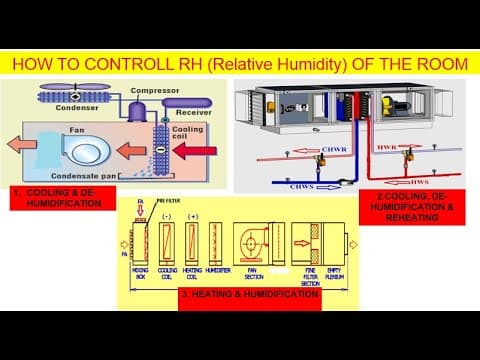
- Cooling and Dehumidification: This involves using cooling coils to lower the air temperature, which in turn reduces the air's capacity to hold moisture. The cooled air can then be circulated to maintain desired humidity levels.
- Heating and Humidification: In colder months, heating the air while adding moisture can help maintain comfort levels. This is particularly important in environments like hospitals where specific humidity levels are critical.
- Ventilation and Air Exchange: Proper ventilation helps in managing indoor air quality and humidity. By exchanging indoor air with outdoor air, it is possible to dilute indoor humidity levels.
Seasonal Adjustments
- Summer: During summer, the focus should be on dehumidification. The cooling coils should be set to achieve a temperature that allows for effective moisture removal.
- Monsoon: In monsoon conditions, the system should be adjusted to handle higher humidity levels. This may involve using both cooling and heating elements to maintain a balanced environment.
- Winter: In winter, heating systems should be employed to raise the temperature while also adding moisture to prevent dryness.
Practical Applications
In practical scenarios, such as in hospitals or clean rooms, maintaining specific RH levels is critical. For instance, a hospital may require an RH of 23% ± 2% to ensure patient comfort and safety. This necessitates a well-designed HVAC system that can adapt to varying conditions throughout the year.
Example of Implementation
Consider a hospital project where the design parameters include:
- Summer: Target RH of 50% with a dry bulb temperature of 23°C.
- Monsoon: Adjustments to maintain an RH of 60% while ensuring the temperature does not exceed 28°C.
- Winter: Maintaining an RH of 40% with a dry bulb temperature of 20°C.
To achieve these targets, the HVAC system must be equipped with sensors and controls that can dynamically adjust the cooling and heating processes based on real-time data.
Conclusion
Controlling relative humidity in HVAC systems is a complex but essential task that requires careful consideration of design parameters, seasonal variations, and practical applications. By understanding the principles of RH control and implementing effective strategies, HVAC professionals can ensure comfortable and healthy indoor environments.
Call to Action
If you found this information helpful, please share your thoughts in the comments below. For more insights on HVAC systems and humidity control, subscribe to our channel and stay updated with our latest videos.