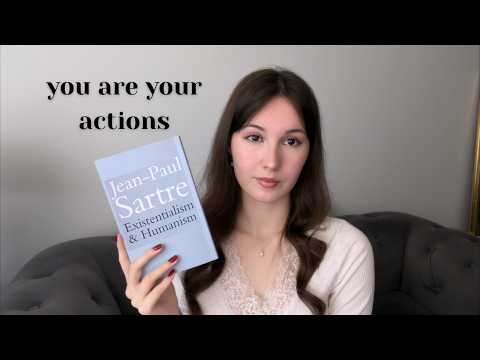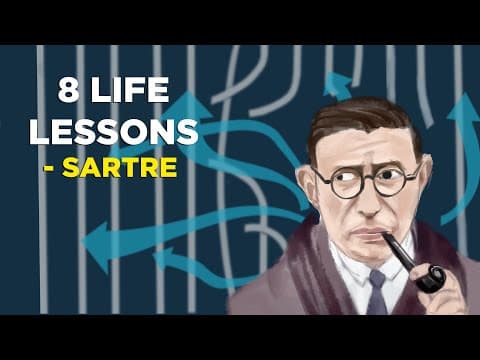
Jean-Paul Sartre's existentialism teaches that humans are born without essence and must define themselves through actions. Key lessons include daring to act, embracing freedom and responsibility, setting examples, facing fears, rejecting external definitions, avoiding blind adherence to doctrines, and embracing nothingness as potential. These principles guide authentic living and personal growth.
Jean-Paul Sartre was a multifaceted French intellectual—playwright, screenwriter, political activist, literary critic, and a leading philosopher of existentialism. His philosophy centers on the idea that humans are born as blank slates, free to determine their own identity, behavior, and goals. This article explores eight important life lessons derived from Sartre's existentialist works, offering profound insights into freedom, responsibility, and authentic living.
Born in Paris at the dawn of the twentieth century, Sartre was awarded the Nobel Prize in Literature in 1964, which he famously declined, stating that “a writer should never allow himself to become an institution.” His notable works include Nausea, Being and Nothingness, Existentialism is a Humanism, and No Exit. Sartre’s philosophy challenges essentialism—the belief in a fixed human nature—and instead promotes existentialism, which holds that existence precedes essence.
Sartre asserts, “Man is nothing else but what he makes of himself.” Unlike objects that simply are what they are (objects-in-itself), humans are objects-for-itself, meaning they have no predetermined essence and possess the power to define themselves through their actions.
Most people live reactively, responding only when expected. However, authentic existence requires proactive initiative—acting on one’s own ideas and values. To become unique and free, one must dare to act beyond societal expectations and rules.
“Freedom is what you do with what’s been done to you,” Sartre explains. Even in restrictive circumstances, such as imprisonment, individuals retain the freedom to choose their attitude and response. Denying this freedom is what Sartre calls living in “bad faith.”
Living authentically means acknowledging your freedom and consciously choosing your reactions. Avoid the trap of saying, “I had no choice,” and instead ask yourself, “How can I act authentically in this situation?”
Sartre emphasizes that freedom comes with responsibility: “Man being condemned to be free carries the weight of the whole world on his shoulders.” Every action expresses your values and defines who you are.
Excuses such as blaming human nature, others, or circumstances are invalid. You always have choices, and you must accept responsibility for them. Denying responsibility leads back to bad faith.
When you choose yourself, you also choose for all humanity. Your actions communicate values to the world and set examples for others. Sartre urges living consciously and acting in ways you would want others to emulate.
Avoid making exceptions for yourself that you wouldn’t accept from others. Ask yourself, “What if everybody did that?” This perspective fosters integrity and social responsibility.
Sartre describes acting as “happy agony.” Freedom presents itself as anguish—the fear and uncertainty inherent in making choices and taking responsibility.
Fear is unavoidable, but it should not prevent action. Instead, embrace your fears and act despite them. Anguish is a sign of freedom, and learning to live with it is essential to authentic existence.
Sartre notes that shame arises from recognizing oneself as an object judged by others. We often allow others’ perceptions to trap us in fixed identities, limiting our freedom.
To regain freedom, recognize that others’ judgments are not objective facts. You are an object-for-itself, full of potential and not confined by labels. Stay true to yourself regardless of external opinions.
Sartre warns against relying on doctrines for moral guidance, as they are too abstract to address specific, concrete situations. He illustrates this with the story of a student facing a moral dilemma during World War II, emphasizing that only the individual can make authentic choices.
While advice can inspire, ultimate responsibility lies with you. Choose the path that feels most authentic, rather than blindly following external rules or others’ opinions.
Sartre states, “Nothingness lies coiled in the heart of being.” Humans are defined not by fixed essences but by the absence of them—a nothingness that represents limitless potential.
Recognizing what you are not allows you to see what you can become. Instead of clinging to fixed identities, view yourself as a blank canvas capable of endless possibilities. Your actions define you, but only if you first embrace your emptiness and potential.
Jean-Paul Sartre’s existentialism challenges us to live authentically by embracing freedom, responsibility, and the courage to define ourselves through our actions. By daring to act, facing our fears, and rejecting external definitions, we can lead meaningful lives full of potential and integrity.