Albert Camus' philosophy of absurdism offers a way to confront the inherent meaninglessness of life by encouraging individuals to embrace freedom, find meaning in chaos, and accept suffering as part of the human experience. Instead of succumbing to nihilism, absurdism advocates for living fully and creating personal meaning amidst life's struggles.
In a world filled with existential questions, many find themselves pondering the purpose of life. Why are we here? Why do we work so hard, only to face death one day? These profound questions often arise, particularly for those who do not subscribe to religious beliefs. Albert Camus, a prominent philosopher, addressed these concerns through his philosophy of absurdism, which offers a unique perspective on finding happiness in a seemingly meaningless existence.
Historically, religion provided comfort and answers to life's big questions. For many, the belief in a higher power offered a sense of purpose, regardless of life's challenges. However, as modernity progressed, scientific discoveries, such as Darwin's theory of evolution, led to a decline in religious adherence. Friedrich Nietzsche famously declared, "God is dead," highlighting the chaos that ensues when society loses its connection to spirituality. Without a higher power, many individuals grapple with nihilism, questioning the very essence of existence.
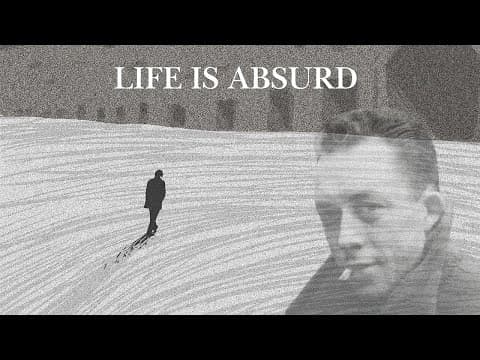
In response to nihilism, Camus introduced absurdism, a philosophy that acknowledges the clash between humanity's desire for meaning and the universe's indifference. He illustrated this concept through the Greek myth of Sisyphus, who is condemned to push a boulder up a mountain, only for it to roll back down each time he reaches the top. This endless cycle symbolizes the human condition—an ongoing struggle for purpose that often feels futile.
Camus reinterprets Sisyphus's punishment as a metaphor for life itself. He argues that instead of succumbing to despair, we should embrace the absurdity of our existence. By imagining Sisyphus happy in his struggle, Camus suggests that we can find worth in the journey itself. He posits that acknowledging life's limitations allows us to discover freedom and live fully in the present.
Camus proposed three different paths individuals might take when confronting the absurdity of existence:
Philosophical Suicide: This approach involves adopting a belief system—any belief system—as a means to escape the discomfort of existential questions. However, Camus warns against this path, as it leads to surrendering the pursuit of truth and meaning.
Absurdism: Camus's preferred path encourages individuals to reject established beliefs and embrace a mindset of defiance. By adopting phrases like "who cares?" and "why worry about it?", we can alleviate the tension of life's monotony and take risks without the fear of failure.
Exploration of Meaning: Instead of fully embracing nihilism or absurdism, Camus suggests that individuals should explore their own beliefs and values. This exploration can lead to personal meaning derived from relationships, passions, and experiences.
Camus's philosophy of absurdism can be distilled into three core teachings:
To navigate an unfree world, one must become absolutely free. This freedom is an act of rebellion against societal norms and expectations. Camus encourages individuals to seek their own meaning rather than passively accepting inherited beliefs.
Life is inherently chaotic, and absurdism teaches us to find joy in the struggle itself. Rather than conforming to societal expectations, we should pursue our passions and cherish small moments. Happiness comes from creating our own meaning amid disorder.
Suffering is an inevitable part of life, but how we respond to it defines our experience. Camus's own struggles with poverty and illness shaped his understanding of human suffering. He believed that embracing life's absurdity allows us to cultivate resilience and appreciate the fleeting beauty of existence.
While absurdism offers a liberating perspective, it also presents challenges. The philosophy's emphasis on not caring can lead to a sense of emptiness if taken too far. Humans are naturally inclined to seek meaning and connection, and a complete rejection of purpose can result in nihilism and despair.
In conclusion, Albert Camus's absurdism provides a framework for confronting the inherent meaninglessness of life. By embracing freedom, finding meaning in chaos, and accepting suffering, we can navigate the complexities of existence with resilience and courage. Instead of succumbing to nihilism, we can choose to live fully, creating our own purpose and reveling in the journey of life. As Camus wisely noted, "You will never be happy if you continue to search for what happiness consists of; you will never live if you are looking for the meaning of life."