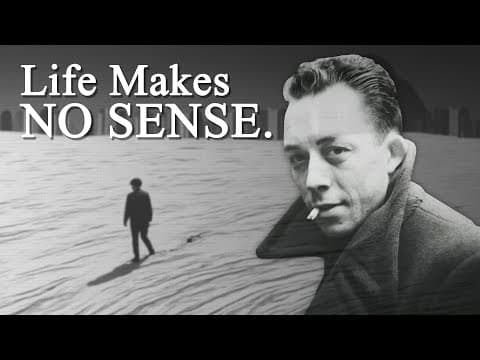
Albert Camus' philosophy of Absurdism teaches that life lacks inherent meaning, but this realization can lead to true happiness. By accepting life's absurdity, we can create our own meaning and find joy in everyday experiences.
In a world where many chase after money they will never spend, strive to impress people they do not even like, and follow unwritten societal rules, one cannot help but wonder: what is the point of it all? This existential question has plagued humanity for centuries, and it is at the heart of French philosopher Albert Camus' exploration of Absurdism.
Historically, people found solace in religion, believing that life had a purpose and that every struggle served a greater plan. However, with the advent of science and reason, these comforting beliefs began to crumble. Charles Darwin's theory of evolution and the Big Bang theory challenged the traditional narratives, leading to a crisis of meaning. Friedrich Nietzsche famously declared, "God is dead," not to suggest a literal death of a divine being, but to highlight the decline of faith in Europe.
As society moved away from religious beliefs, many turned to nihilism—the belief that life is devoid of meaning. This shift resulted in widespread feelings of depression and anxiety, as people grappled with the uncertainty of existence.
Amidst this chaos, Albert Camus emerged with a different perspective. He proposed that perhaps meaninglessness is not our enemy, but rather the key to finding true happiness. Camus identified a fundamental conflict between our desire to find meaning in life and the universe's indifference to our existence. He termed this conflict "the Absurd."
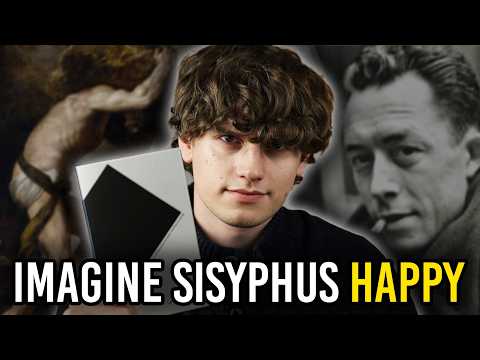
To illustrate his point, Camus referenced the Greek myth of Sisyphus, a figure condemned to push a boulder up a mountain only for it to roll back down each time he reaches the top. While many view Sisyphus' plight as tragic, Camus argued that he embodies the human condition.
The pivotal moment in Sisyphus' story is not the act of pushing the boulder, but rather the acceptance of his fate. Camus suggests that true freedom comes from recognizing that life may be pointless, yet choosing to continue pushing the rock anyway. This acceptance allows individuals to create their own meaning and find joy in the struggle itself.
Camus offers three practical approaches to adopting this mindset:
Drop the What-If Game: Stop obsessing over making the right choices. Life is unpredictable, and every setback can lead to new opportunities.
Live in Rebellion: Choose happiness despite life's inherent meaninglessness. By doing so, you assert your freedom against the absurdity of existence.
Embrace the Why Not Attitude: When nothing matters, everything becomes possible. Take risks and pursue your desires without fear of failure.
Contrary to what one might expect, accepting life's meaninglessness does not lead to despair. Instead, it opens the door to appreciating the small joys in life—like enjoying a cup of coffee, laughing with friends, or feeling the warmth of the sun. Camus encourages us to let go of societal pressures and redefine our understanding of success and happiness.
In a world dominated by social media, where people often showcase their achievements and perfect lives, Camus would likely remind us that these external validations are merely distractions. True power lies in our ability to dismiss these pressures and focus on what truly matters to us.
Camus' philosophy is often misunderstood as a call to live recklessly. However, he advocates for a mindful approach to life—caring about the right things and focusing on the present moment. Life will have its ups and downs, but it is our response to these challenges that defines us.
Ultimately, Camus leaves us with a profound message: one must imagine Sisyphus happy, not because his task is meaningful, but because he persists despite its futility.
As you reflect on your own life—your job, relationships, and daily routines—you may find them lacking in grand significance. However, you have the power to infuse them with your own meaning. Each day presents a choice: to let life's meaninglessness overwhelm you or to use it as a catalyst for creativity, love, laughter, and living fully.
The universe does not owe you meaning, and you do not owe it either. Embrace the absurdity of life, push your own rock, and find joy in the journey. In doing so, you will discover that real happiness does not stem from finding meaning, but from embracing life's meaninglessness and living fully anyway. This is how you win the absurd game and find happiness in a seemingly meaningless world.