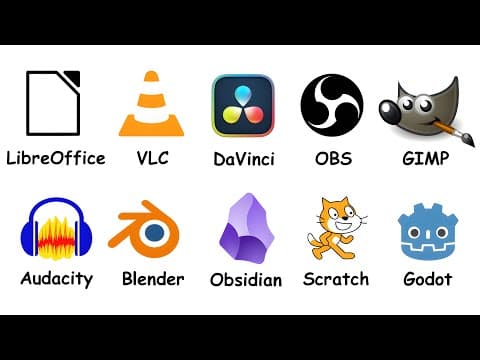
Many people unknowingly spend over $1,000 yearly on software subscriptions. This article explores essential free and open-source alternatives like LibreOffice, VLC, DaVinci Resolve, OBS Studio, GIMP, Audacity, Blender, Obsidian, Scratch, and Godot that replace costly paid software without compromising functionality, helping users save money while maintaining productivity and creativity.
In today's digital age, software subscriptions have become a significant expense for many individuals and businesses. Microsoft Office alone costs around $100 a year, which adds up to roughly $1,000 over a decade just for basic document creation, spreadsheets, and presentations. Beyond Office, subscriptions for Photoshop, Premiere Pro, cloud storage, and productivity apps quietly push many people to spend over $1,000 annually without realizing it.
However, a vast number of paid software applications have free, open-source alternatives that perform almost the same functions without ads, limits, or annoying upgrade reminders. Here is a comprehensive guide to the essential free apps you actually need.
LibreOffice, launched in 2010 as a fork of OpenOffice and maintained by The Document Foundation, offers a full office suite including Writer (documents), Calc (spreadsheets), Impress (presentations), and tools for databases, diagrams, and equations. It supports Microsoft Office file formats, works fully offline, requires no account, and does not send telemetry data.
Many governments, including parts of France's military and Italy's Defense Ministry, have adopted LibreOffice. For most users, it covers all essential office needs. The only limitation is occasional differences in advanced Excel macros and complex PowerPoint animations. For students, freelancers, and small businesses, LibreOffice replaces costly yearly subscriptions with a zero-dollar price tag.
VLC Media Player, started in 2001 as a student project, is renowned for playing virtually every media format imaginable, including obscure and outdated ones. It is lightweight (under 50 MB) and runs smoothly even on older machines.
Beyond playing media, VLC can convert video and audio files, stream media over networks, sync subtitles, record screens, rip DVDs, and play YouTube links directly. Its iconic traffic cone logo originated from developers collecting traffic cones during university.
VLC is the go-to media player for almost everyone once default players fail.
DaVinci Resolve by Blackmagic Design offers a powerful, free video editing suite that combines four professional apps into one: video editing (like Premiere Pro), Fusion for motion graphics and visual effects, Fairlight for audio work, and industry-leading color grading.
Hollywood films such as John Wick, La La Land, and Deadpool have used Resolve for color grading. The free version includes about 95% of features most users need, with the paid Studio version adding advanced noise reduction and AI features.
The downside is that Resolve requires a decent GPU and has a steep learning curve, but it replaces expensive editing, VFX, audio, and color software for content creators.
OBS Studio, released in 2012, is the standard for live streaming and video production. It allows layering of screen capture, webcam, browser tabs, overlays, alerts, and audio sources, enabling real-time production.
It supports high-quality recording, streaming to almost every platform, and has a vast plugin ecosystem including virtual cameras and Stream Deck integration. While initially confusing, OBS is incredibly powerful and free, saving users $60 or more compared to paid alternatives.
GIMP (GNU Image Manipulation Program), launched in 1996, is a full raster graphics editor with layers, masks, filters, brushes, and photo retouching tools. It supports raw photo files and Photoshop PSD projects through plugins.
While its interface can feel dated and lacks native CMYK support, GIMP covers most photo editing needs for thumbnails, social media graphics, and web assets. It is a powerful free alternative to Photoshop, which costs around $260 a year.
Audacity, released in 2000, is the default free audio editor for podcasts, YouTube voice-overs, music demos, and more. It offers multi-track editing, noise removal, volume normalization, EQ, compression, and supports many audio formats.
It supports VST and LV2 plugins for professional audio tools. Despite some controversy in 2021 regarding telemetry, Audacity remains a powerful free tool replacing software costing $95 to $240 annually.
Blender, started in 1994 and open-sourced in 2002 after a community crowdfunding campaign, is a comprehensive 3D production pipeline including modeling, sculpting, rigging, animation, simulations, rendering, video editing, and 2D animation.
Used in productions like Spider-Man: Across the Spider-Verse and Netflix's Next Gen, Blender includes Cycles and Eevee render engines. It has a steep learning curve but replaces expensive 3D software suites costing thousands annually.
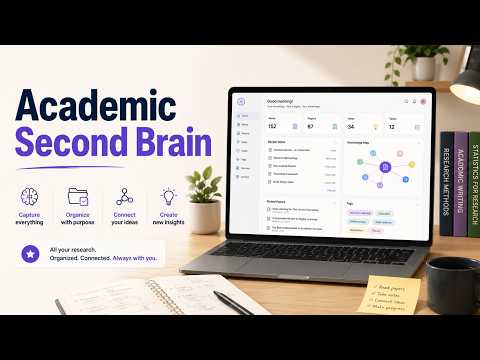
Obsidian, released in 2020, stores notes locally as markdown files without requiring accounts or internet. It features bidirectional linking to create a personal knowledge web visualized through a graph view.
With over 1,500 plugins, Obsidian supports calendars, flashcards, task management, AI tools, and various productivity systems. Syncing requires extra payment or manual setup. It replaces cloud-based note apps like Notion and Evernote while keeping your data under your control.
Scratch, developed by MIT Media Lab in 2007, teaches programming through visual blocks instead of typed code. It introduces loops, variables, conditions, events, and functions in an approachable way.
Running in the browser with no installation needed, Scratch has over 100 million shared projects and is one of the largest programming communities. It provides a free, friendly introduction to coding.
Godot, an open-source game engine under the MIT license, gained attention after Unity's controversial pricing changes in 2023. It supports 2D and 3D development with a scene and node system.
Developers can use GDScript (similar to Python) or C#. Games like Cassette Beasts and Brotato have shipped using Godot. While its 3D tools lag behind Unreal Engine, Godot requires no royalties or fees, making it attractive for indie developers.
This stack of free software replaces thousands of dollars in annual software expenses across office productivity, media playback, video editing, streaming, photo editing, audio editing, 3D modeling, note-taking, programming, and game development.
The main trade-off is time spent learning these tools, as free software often requires more effort than paid alternatives. However, for most users, this trade-off is well worth the significant cost savings.
Which of these apps do you already have installed? Which will you try next? These free tools empower you to maintain productivity and creativity without breaking the bank.
And remember, the one free app sitting on every device that most people overlook is your web browser. Choosing the right browser can significantly impact your privacy, speed, and data security. Stay tuned for more insights on that topic.