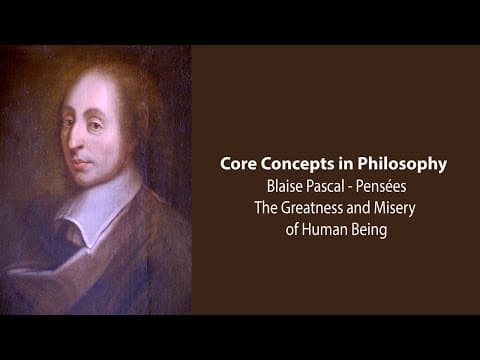
Blaise Pascal's Pensées presents a profound exploration of the duality of human nature, emphasizing the coexistence of greatness and misery. Pascal argues that understanding this duality is essential for grasping the human condition, and he critiques philosophical perspectives that overlook either aspect. Ultimately, he suggests that the Incarnation provides a framework for reconciling these two sides of humanity.
In the realm of philosophy, few figures have captured the complexities of human existence as poignantly as Blaise Pascal. His work, Pensées, delves into the duality of human nature, presenting a compelling argument that we must recognize and navigate the contrasting elements of our existence: our greatness and our misery. This blog post will explore these themes as articulated by Pascal, shedding light on the intricate balance that defines the human condition.
Pascal posits that human beings embody a dual nature, characterized by both grandeur and wretchedness. He encourages us to reflect on our position within the universe, urging us to consider ourselves in relation to the vastness of existence. In doing so, he introduces the concept of the "two abysses"—the infinite and the nothing. This metaphysical framework prompts a profound self-examination, leading to a realization of our insignificance in the grand scheme of things.
Pascal articulates that when we contemplate our existence, we are confronted with the stark reality of being caught between these two extremes. He famously states that humans are like a reed—fragile and easily broken, yet possessing the unique ability to think. This capacity for thought elevates our dignity, allowing us to comprehend the universe, even as we remain vulnerable to its forces.
Pascal further explores how our understanding of human nature can be viewed through different lenses. He suggests that we can assess our nature based on our purpose or end, which reveals our greatness, or by our actions, which may lead to perceptions of our vileness. This duality often results in philosophical disputes, as differing interpretations of human nature can lead to conflicting conclusions about our essence.
Interestingly, Pascal argues that our misery is derived from our greatness. The very capacity to aspire to higher ideals and recognize our potential also exposes us to the pain of failing to achieve them. Conversely, some may infer greatness from their wretchedness, recognizing that their struggles highlight their potential for nobility. This interplay creates a cyclical relationship between our perceived greatness and misery, suggesting that both aspects are essential to understanding the human experience.
Pascal critiques philosophers for their failure to adequately address the complexities of human nature. He argues that many philosophical frameworks either emphasize pure greatness or pure littleness, neglecting the nuanced reality of our existence. Instead, he advocates for a balanced perspective that acknowledges both our dignity and our frailty.
A pivotal aspect of Pascal's thought is the concept of the Incarnation, which he presents as a remedy for the oscillation between pride and despair. He asserts that recognizing our misery alongside the greatness of the remedy provided by the Incarnation allows us to find a middle ground. This understanding fosters humility and prevents the pitfalls of both despair and presumption.
In conclusion, Blaise Pascal's Pensées offers a profound exploration of the duality of human nature. By acknowledging both our greatness and our misery, we can cultivate a deeper understanding of ourselves and our place in the universe. Pascal's insights challenge us to navigate the complexities of our existence with humility and awareness, ultimately guiding us toward a more comprehensive grasp of the human condition. Through this lens, we can appreciate the richness of our experiences and the intricate balance that defines what it means to be human.