This blog post delves into the complex and often dark thoughts surrounding humanity's flaws, societal issues, and the philosophical musings inspired by Charles Bukowski's quote "It is not bearable." The discussion touches on themes of individual responsibility, societal hypocrisy, and the inherent contradictions in human behavior, ultimately questioning the nature of existence and the human condition.
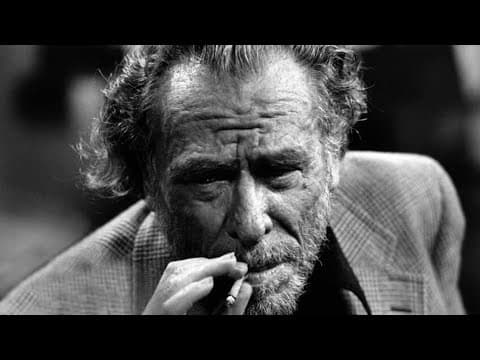
In a recent video, the speaker reflects on the discomforting truths about humanity, drawing inspiration from the works of Charles Bukowski, particularly his haunting line, "It is not bearable." This phrase encapsulates a profound sense of despair regarding the state of the world and the people inhabiting it. The discussion unfolds through a series of interconnected thoughts that probe into the nature of human existence, societal hypocrisy, and the contradictions that define our lives.
The speaker begins by expressing a deep-seated frustration with humanity, suggesting that the more one contemplates the actions and behaviors of people, the less one wishes to engage with them. This sentiment resonates with Bukowski's observations about the emptiness and cruelty that often characterize human interactions. The speaker's reflections are not limited to political figures like Donald Trump but extend to a broader critique of societal norms and values.
A significant theme in the discussion is the illusion of progress. The speaker argues that despite advancements in society, the underlying issues—such as gun violence, inequality, and systemic oppression—remain unresolved. The notion that individuals can be blamed for societal problems is challenged, as the speaker emphasizes that these issues are deeply rooted in the collective behavior of humanity.
The speaker highlights the contradictions inherent in societal beliefs, particularly regarding morality and justice. For instance, there is a stark contrast between the condemnation of abortion and the indifference towards mass shootings. This hypocrisy is further illustrated through the lens of religious beliefs, where individuals profess love and compassion yet fail to extend that to marginalized groups.
While acknowledging the importance of individual responsibility, the speaker posits that this concept is often misapplied. The idea that individuals alone are to blame for societal ills overlooks the complex interplay of societal structures and personal experiences. The speaker argues that many individuals are products of their environments, shaped by the very systems that perpetuate inequality and suffering.
As the discussion progresses, the speaker delves into existential themes, questioning the very nature of existence. Drawing from Bukowski's poetry, the speaker reflects on the absurdity of life and the pervasive sense of despair that accompanies it. The line "It is not bearable" serves as a poignant reminder of the struggles faced by individuals in a world that often feels overwhelming and devoid of meaning.
In a world filled with contradictions and suffering, the search for meaning becomes a central concern. The speaker suggests that the quest for understanding and purpose is often met with frustration, as societal norms and expectations can stifle individuality and authenticity. This struggle is compounded by the realization that many people are trapped in cycles of mediocrity and despair, unable to break free from the constraints imposed by society.
Ultimately, the speaker's reflections serve as a call to confront the uncomfortable truths about humanity. By embracing the darkness and acknowledging the flaws within ourselves and society, we can begin to navigate the complexities of existence. Bukowski's haunting words remind us that while life may often feel unbearable, it is through this acknowledgment that we can seek to understand and perhaps find a semblance of meaning in the chaos.
In a world that often prioritizes superficiality and denial, the speaker's candid exploration of these themes invites us to engage in deeper conversations about the human condition, challenging us to confront the realities that lie beneath the surface of our everyday lives.