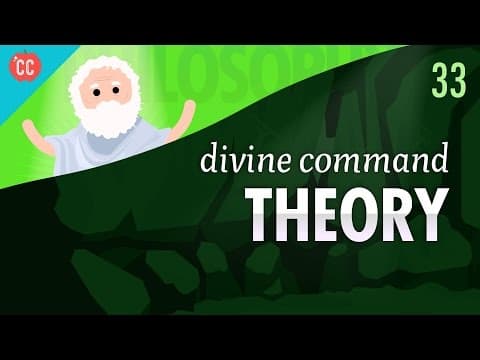
Divine Command Theory posits that morality is dictated by God's commands, but it faces significant challenges, particularly the Euthyphro Problem, which questions whether actions are right because God commands them or if God commands them because they are inherently right. This dilemma raises concerns about the nature of morality and God's omnipotence, leading to ongoing debates in ethical philosophy.
Divine Command Theory is a significant ethical framework that asserts that morality is grounded in the commands of God. This theory has been a cornerstone for billions of believers who look to religious texts, such as the Bible, for moral guidance. However, this theory is not without its challenges, particularly highlighted by the philosophical inquiries of Plato.
The foundation of Divine Command Theory lies in the belief that God, as the creator of everything, also provides a divine rulebook for human morality. For many, the Bible serves as this manual, offering explicit instructions on how to live a moral life. For instance, the book of Deuteronomy prohibits the mixing of wool and linen, while the First Epistle to Timothy advises against women wearing braids or gold chains. These examples illustrate how divine edicts shape moral understanding for many individuals.
The simplicity of Divine Command Theory is one of its appealing aspects. When faced with moral dilemmas, adherents can simply refer to their understanding of God's commands to determine the right course of action. This approach also addresses the grounding problem in ethics, providing a clear foundation for moral principles: God is the ultimate source of morality.
Despite its appeal, Divine Command Theory raises several questions and dilemmas. For example, why do some biblical rules, like the prohibition against mixing fabrics, apply to certain groups but not others? Observant Jews may adhere to specific Old Testament laws, while many Christians may disregard them. This inconsistency leads to confusion about which commands are binding and which are not.
One of the most significant critiques of Divine Command Theory comes from Plato's dialogue known as the Euthyphro Problem. In this dialogue, Socrates engages with Euthyphro, who believes he is acting morally by prosecuting his father based on divine command. Socrates poses a critical question: Are right actions right because God commands them, or does God command them because they are inherently right?
This question presents a dilemma with two distinct horns:
First Horn: If right actions are right solely because God commands them, then morality becomes arbitrary. This implies that God could declare any action, even those we consider immoral, as good simply by commanding it. This raises concerns about the nature of goodness and the potential for moral standards to shift unpredictably based on divine will.
Second Horn: If God commands actions because they are good, then it suggests that there exists a standard of goodness independent of God. This challenges the notion of God's omnipotence, as it implies that even God must adhere to an external moral standard. Furthermore, if morality exists outside of God, one might question why they need to rely on divine commands at all.
The implications of the Euthyphro Problem are profound. Choosing either horn leads to significant philosophical challenges for Divine Command Theory. If morality is entirely dependent on God's commands, it risks becoming arbitrary and vacuous. Conversely, if morality exists independently of God, it undermines the necessity of divine authority in ethical matters.
Additionally, the question of how we discern which commands are binding complicates the theory further. Many biblical instructions are often ignored or reinterpreted by modern believers, leading to the question: Are these commands truly authoritative, or merely recommendations? This inconsistency raises doubts about the reliability of Divine Command Theory as a moral framework.
Divine Command Theory offers a compelling perspective on the origins of morality, rooted in the belief that God provides a definitive guide for ethical behavior. However, the challenges posed by the Euthyphro Problem and the inconsistencies in interpreting divine commands highlight significant limitations of this theory. As we continue to explore moral philosophy, it is essential to consider alternative frameworks that may address these dilemmas more effectively. The ongoing discourse surrounding Divine Command Theory and its critiques remains a vital part of philosophical inquiry into the nature of morality and ethics.