In this blog post, we delve into Raymond Smullyan's philosophical dialogue 'Is God A Taoist?' which explores the concepts of free will, moral responsibility, and the nature of God. Through a conversation between a mortal and God, Smullyan examines the burdens of free will, the essence of sin, and the implications of a utilitarian perspective on morality. This engaging dialogue challenges traditional views and invites readers to reflect on their understanding of existence and the divine.
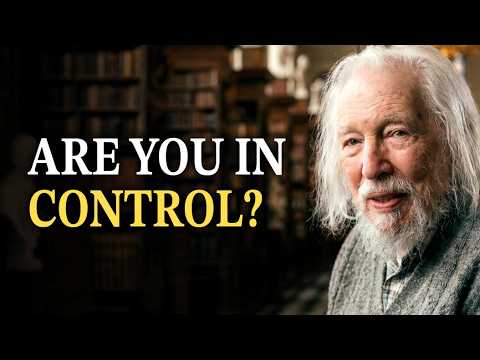
Raymond Smullyan was a multifaceted thinker—mathematician, logician, philosopher, and Taoist. His work often intertwines humor with profound philosophical inquiries. In this blog post, we explore his dialogue titled "Is God A Taoist?" which presents a conversation between a mortal and God, addressing the complexities of free will, moral responsibility, and the nature of divinity.
Curt Jaimungal, a filmmaker with a background in mathematical physics, introduces Smullyan's work, emphasizing its relevance to discussions about rationality, God, and free will. The dialogue is framed as a conversation where the mortal expresses a desire to be absolved of the burden of free will, leading to a deeper exploration of what it means to be human and the implications of our choices.
The dialogue begins with the mortal pleading with God to relieve him of free will, arguing that it is a burden rather than a gift. God counters this by stating that rejecting free will is rejecting the greatest gift bestowed upon humanity. The mortal responds by highlighting the moral responsibility that comes with free will, which he finds unbearable.
The mortal expresses feelings of guilt over past actions and the pressure of moral responsibility. This leads to a discussion about the nature of sin and temptation. God questions why the mortal feels compelled to sin, prompting a reflection on the nature of desire and the struggle against temptation. The mortal admits to a desire to avoid sin but feels powerless against it, illustrating the internal conflict many face regarding moral choices.
As the conversation unfolds, God reassures the mortal that if he cannot resist temptation, he is not sinning of his own free will. This raises questions about the essence of sin and moral culpability. The mortal grapples with the idea that his actions may not be entirely his own, leading to a deeper inquiry into the nature of free will and determinism.
God presents a hypothetical scenario where the mortal could be granted a pill that would remove his abhorrence of sin. The mortal refuses, realizing that his current abhorrence is what prevents him from taking the pill. This exchange highlights the paradox of free will: the very ability to choose is what makes the mortal's struggle meaningful.
The dialogue continues to explore the implications of free will and determinism. God suggests that the mortal's understanding of free will is flawed, as it is an intrinsic part of consciousness. The mortal's confusion stems from viewing free will as a moral issue rather than a metaphysical one.
As the conversation progresses, God reveals a more utilitarian perspective on morality, emphasizing that the essence of sin lies in the suffering it causes rather than the act itself. This challenges traditional views of divine justice and morality, suggesting that God is not merely a moralist but rather a facilitator of the process of enlightenment.
God explains that the process of achieving ultimate perfection is a journey for all sentient beings. He emphasizes that suffering is a part of this process, and understanding this can alleviate the burdens of guilt and moral responsibility. The dialogue suggests that true enlightenment comes from recognizing the interconnectedness of all beings and the nature of existence.
The mortal expresses concern about the implications of free will on societal behavior. God reassures him that free will is essential for personal growth and that the potential for harm exists, but it is balanced by the capacity for compassion and understanding. This perspective encourages a shift from a fear-based understanding of morality to one rooted in empathy and connection.
In the final exchanges, God challenges the mortal's preconceived notions about divine nature, suggesting that God is not merely a personal being but rather the very process of existence itself. This radical redefinition invites readers to reconsider their understanding of God and the universe.
Smullyan's playful yet profound dialogue captures the unconscious thoughts many have about God, free will, and morality. It encourages readers to engage with these concepts critically and to explore the deeper implications of their beliefs. Through humor and philosophical inquiry, Smullyan invites us to reflect on the nature of existence and our place within it.
In conclusion, "Is God A Taoist?" serves as a thought-provoking exploration of free will, morality, and the divine, challenging us to rethink our assumptions and embrace the complexities of our existence.