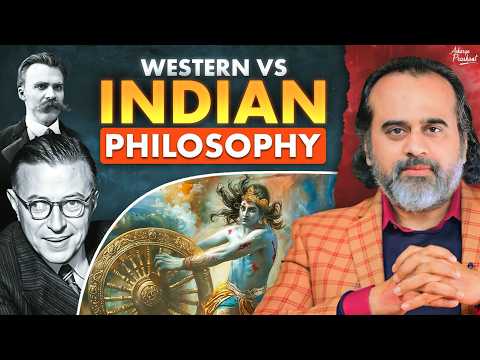
This blog post delves into the contrasting yet complementary views of freedom in Western existentialism and Indian philosophy, particularly through the lens of the Bhagavad Gita. It discusses the concepts of existential angst, the nature of purpose, and the quest for personal essence, highlighting the struggle between societal expectations and individual freedom.
In the quest for understanding true freedom, the philosophies of the West and India present intriguing perspectives. This discussion centers around the Bhagavad Gita's teachings on liberation and unity with nature, juxtaposed with Western existentialism's emphasis on personal freedom and the inherent angst that accompanies it.
The Bhagavad Gita speaks to the liberation of the ego and the importance of unity with nature. However, this raises questions about how these ideas align or conflict with existentialist thought, particularly the notion that existence precedes essence. Existentialism posits that human beings are born without a predetermined purpose, suggesting that individuals must discover their essence through their experiences and choices.
Existentialists, such as Jean-Paul Sartre, argue that life is inherently purposeless, leading to what is known as existential angst. Sartre famously stated, "Man is condemned to be free," highlighting the burden of freedom and the anxiety that arises from the responsibility of defining one's own essence. This contrasts sharply with the deterministic views found in some philosophical traditions, where purpose is assigned externally.
A key aspect of existentialist philosophy is the refusal to accept external dictation of one's life and purpose. The existentialists assert that individuals must seek their own meaning, as no one else can provide it. This perspective aligns with the Gita's emphasis on self-discovery and the liberation of the ego, suggesting that both philosophies advocate for an internal compass guiding one's life choices.
The discussion also touches on the societal pressures that often conflict with individual freedom. In many cultures, including post-war France, there is a strong emphasis on conformity and adherence to societal norms. This creates a tension between the individual's desire for freedom and the expectations imposed by society, leading to a profound sense of angst. The existentialists argue that this angst arises from the struggle to assert one's identity against external pressures.
The cultural revolutions of the 1960s and 70s in Europe exemplified a collective rejection of imposed structures and norms. The famous refrain, "We don't need no education," encapsulates the desire for liberation from societal constraints. This movement was a response to the existential angst felt by many, as they sought to break free from the molds that society had cast for them.
The conversation also introduces the concept of simulated reality, as proposed by philosopher Nick Bostrom. This theory suggests that our experiences may be controlled by an external agent, challenging the notion of free will. However, the central question remains: regardless of whether our reality is simulated or not, are we content with our lives? The essence of spirituality and philosophy begins with the acknowledgment of suffering and the pursuit of joy.
Ultimately, the exploration of freedom through the lenses of Western and Indian philosophy reveals a complex interplay between individual essence and societal expectations. While existentialism emphasizes the struggle for personal freedom and the rejection of external definitions, the Bhagavad Gita offers a path toward unity with nature and self-liberation. Both philosophies invite us to reflect on our own lives, encouraging a journey toward understanding and embracing our true essence amidst the chaos of external influences.