David Hume's 'Dialogues Concerning Natural Religion' presents a philosophical discussion through characters debating the nature of religion and skepticism. The dialogue highlights the tension between faith and reason, with characters Demia, Philo, and Clianthes representing different perspectives on education, skepticism, and the validity of religious beliefs.
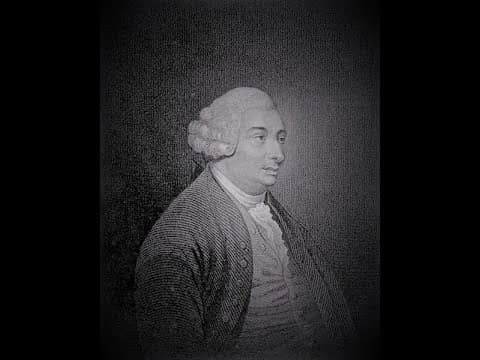
David Hume's work, "Dialogues Concerning Natural Religion," is not structured like a traditional philosophy book. Instead, it unfolds as a dialogue among characters, resembling a play or fictional narrative. This unique format raises questions about Hume's intentions and the philosophical ideas he wishes to convey.
The dialogue format allows Hume to explore various perspectives on religion without directly revealing his own views. Scholars suggest that the character Philo, who embodies skepticism, closely aligns with Hume's own beliefs. However, the other characters, Demia and Clianthes, are presented in a favorable light, indicating that Hume may also acknowledge some of their arguments.
Demia: He begins by discussing the philosophy of education, asserting that students should first learn logic, then ethics, followed by physics, and finally, the nature of the gods, which pertains to theology. Demia's approach raises a critical question: why should theology be relegated to the end of one's education? Philo challenges this notion, arguing that moral and religious principles should be foundational in education.
Philo: As a skeptic, Philo emphasizes the limitations of human reason. He agrees with Demia's educational strategy but stresses the importance of recognizing the weaknesses and narrow limits of human understanding. Philo's skepticism is particularly directed towards religious claims, suggesting that such matters are beyond human grasp.
Clianthes: He expresses concern over Philo's skepticism, questioning whether it is possible to establish religious faith on a foundation of philosophical doubt. Clianthes challenges Philo's consistency, pointing out that while he accepts evidence and reason in other areas, he seems to reject them when it comes to religion.
The dialogue progresses as Clianthes critiques Philo's skepticism. He argues that true skepticism should not lead to a rejection of all knowledge, particularly in religious matters. Clianthes identifies two types of skepticism:
Clianthes accuses Philo of being inconsistent, as he accepts scientific theories while dismissing religious truths without sufficient discussion of the evidence. He argues that this selective skepticism is a form of prejudice and passion, undermining Philo's philosophical stance.
The dialogue concludes with Clianthes asserting that since the time of John Locke, religion has increasingly been based on reason and evidence. This assertion invites readers to reflect on the relationship between faith and reason, and whether skepticism can coexist with religious belief.
Hume's "Dialogues Concerning Natural Religion" thus serves as a profound exploration of the complexities surrounding faith, reason, and the human condition, encouraging readers to engage with these timeless philosophical questions.