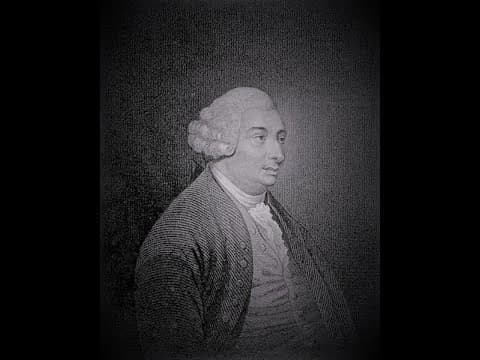
In Part 2 of David Hume's Dialogues Concerning Natural Religion, the characters Demia, Philo, and Cleanthes engage in a philosophical debate about the existence and nature of God, focusing on the limitations of human language and the validity of analogical reasoning in proving God's existence.
David Hume's Dialogues Concerning Natural Religion presents a profound exploration of the existence and nature of God through a philosophical dialogue among three characters: Demia, Philo, and Cleanthes. In Part 2, the discussion delves into the limitations of human understanding and language when it comes to describing God, as well as the validity of arguments for God's existence.
The dialogue begins with Demia expressing surprise at Cleanthes' assertion from Part 1 that he can describe God using human language and prove God's existence through reason and evidence. Demia argues that the existence of God is already known to everyone and that God's nature transcends human comprehension. He posits that the best we can say is that God is a spirit, emphasizing that our ability to describe God is fundamentally limited.
Philo supports Demia's view, stating that God's existence is "unquestionable and self-evident." He argues that everything in existence has a cause, but he does not necessarily identify himself as a theist. Philo asserts that while we may use terms like "great," "knowledgeable," and "all-powerful" to describe God, these terms fail to capture the true nature of God, who is far beyond human understanding. He concludes that our ideas are limited to our experiences, and since God is beyond our experience, we cannot truly know or understand Him.
In contrast, Cleanthes presents an argument for God's existence based on the observation of nature. He draws an analogy between nature and a machine, noting that both have parts, complexity, and apparent purpose. He argues that just as a machine has a designer, so too must nature have a designer. Cleanthes states, "since therefore the effects resemble each other, we are led to infer by the rules of analogy that the causes also resemble."
Demia is scandalized by Cleanthes' argument, believing it plays into the hands of atheists by relying on an a posteriori (inductive) argument, which he views as inherently uncertain. He insists that a non-a priori argument is necessary for a more robust proof of God's existence. Philo adds to this critique, arguing that Cleanthes' analogy is weak. He suggests that the dissimilarities between nature and human artifacts diminish the strength of the argument.
Philo challenges Cleanthes by questioning whether it is valid to compare a house, which has a designer, to the universe. He argues that the analogy weakens as one departs from the similarity of the cases. Cleanthes defends his position, asserting that the house is indeed similar to the universe in terms of having parts and complexity, which leads to the conclusion of a designer.
Philo seeks to clarify Cleanthes' argument, restating that Cleanthes believes any assembly or order in nature must have a mind behind it. Cleanthes agrees, reinforcing his conclusion that God exists due to the order observed in nature. However, Philo counters that the comparison between nature and machines is disproportionate, arguing that one cannot infer the existence of a designer for the universe based on the existence of human-made objects.
Cleanthes attempts to bolster his argument by referencing Copernicus, suggesting that if Philo objects to his reasoning, he must also object to Copernicus' theories. Philo rebuts this by stating that Copernicus' theories are grounded in observable phenomena, making them more relatable and understandable than Cleanthes' assertions about God.
The dialogue in Part 2 of Hume's Dialogues Concerning Natural Religion presents a rich philosophical examination of the arguments surrounding the existence and nature of God. Through the contrasting views of Demia, Philo, and Cleanthes, Hume illustrates the complexities of using human language and reasoning to grapple with divine concepts. The discussion raises critical questions about the validity of analogical reasoning and the limitations of human understanding in the face of the divine, leaving readers to ponder the nature of belief and knowledge in relation to God.