This blog post delves into the various stereotypes Italians hold about each other, highlighting regional differences and the cultural nuances that shape these perceptions. From the North-South divide to city-specific stereotypes, we explore how these views reflect broader societal attitudes and the humor that often accompanies them.
Hello everyone and welcome back to LearnAmo! In this post, we will explore the fascinating world of stereotypes that Italians hold about each other. While many stereotypes about Italians are known worldwide, such as being late or loud, the perceptions Italians have of their fellow countrymen can be quite different. Let’s dive into the regional stereotypes that shape how Italians view one another.
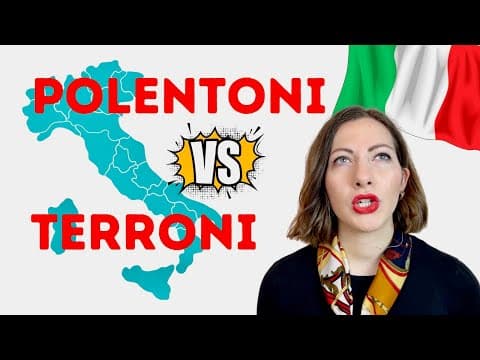
One of the most significant divides in Italy is between the North and the South. This divide is often reflected in the language used to describe people from different regions. Northerners sometimes refer to Southerners as "terroni," a term that carries a negative connotation, implying that Southern Italy is rural and agricultural. Conversely, Southerners use the term "polentoni" to describe Northerners, referencing polenta, a staple food in the North, and suggesting that they are elitist.
Milan, known for its fashion and finance, has a reputation among Italians as being cold and arrogant. People from Milan are often seen as always in a hurry, but they are also respected for being reliable and keeping their promises.
In Rome, the stereotypes are less pronounced, but Romans are known for their pride in their culinary traditions, particularly when it comes to dishes like carbonara. Within the city, there are distinctions between Northern and Southern Romans, with the affluent "pariolini" from the North being viewed as showy and arrogant, while the "bori" from the South are seen as simpler and more down-to-earth.
Bologna is often described with three adjectives: wise, fat, and red. This reflects its status as a cultural hub with the oldest university in the Western world, its rich culinary traditions, and its historical association with communism.
In Veneto, the stereotypes revolve around alcohol consumption, with many Italians joking that Venetians are heavy drinkers due to the popularity of prosecco and spritz. However, statistics show that Venetians are not the top drinkers in Italy. Additionally, Venetians are often accused of being racist, stemming from the rise of the far-right Lega Nord party in the region.
Naples is perhaps the city with the most stereotypes, often unfairly labeled as a hub of crime and dishonesty. However, data suggests that Naples is safer than Rome. The stereotype of Neapolitans as lazy or dishonest is also prevalent, which is a misconception that extends to Sicily, where many believe everyone is involved in the mafia.
Ligurians are often seen as stingy, a stereotype they themselves joke about. They are also perceived as inhospitable, although this is often taken lightly among locals.
A humorous stereotype about Molise is that it "doesn't exist." This joke has gained traction online, leading to a newfound interest in the region, as people now take photos to prove its existence.
It is essential to remember that these stereotypes, while they may contain a grain of truth, do not represent the entirety of the people from these regions. They are often exaggerated and can be humorous in nature. This exploration of stereotypes serves to provide insight into Italian culture and the playful banter that exists among Italians about their regional differences.
Did you know about these stereotypes? Share your thoughts and experiences in the comments below! If you have more anecdotes or stereotypes to add, we would love to hear them. For more insights into Italian culture, check out our other content on LearnAmo.