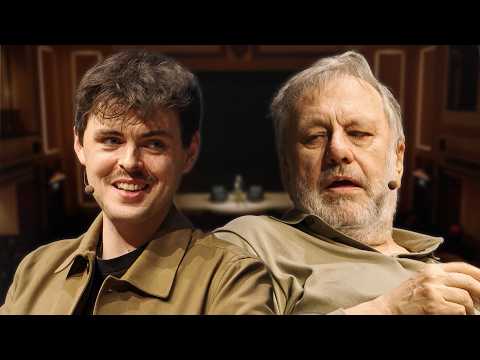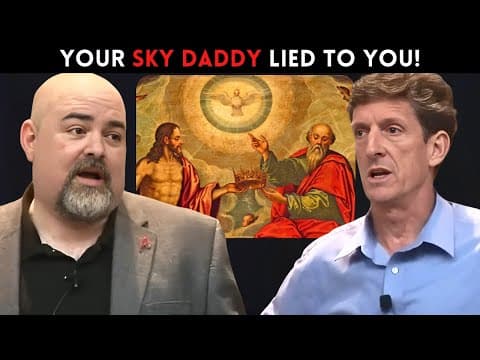
In a thought-provoking debate, Matt Dillahunty and Cliffe Knechtle discuss the existence of life after death, the nature of the soul, and the implications of atheism. Dillahunty argues that personality and consciousness are products of the brain, while Knechtle defends the belief in a supernatural God and life after death based on historical evidence. The discussion challenges the audience to consider the meaning of life and morality without reliance on religious beliefs.
In a compelling discussion, Matt Dillahunty and Cliffe Knechtle engage in a debate about the existence of life after death, the nature of the soul, and the implications of atheism. This dialogue not only challenges traditional beliefs but also invites the audience to reflect on the meaning of life and morality in a secular context.
Dillahunty begins by asserting that we are physical beings in a physical universe governed by physical laws. He emphasizes that truths about our existence can be discovered through our interactions and experiences, rather than relying on a transcendent mind to dictate what is true. He argues that everything that constitutes our identity, including personality and consciousness, is rooted in the brain.
Dillahunty points out that historical and religious attributions of a soul can be traced back to brain functions. He cites experiments involving individuals with brain damage, which demonstrate that personality traits, preferences, and memories can be altered or lost entirely. For instance, he references split-brain patients who exhibit distinct personalities in each hemisphere of their brain, raising questions about the continuity of identity if a soul were to exist.
Dillahunty challenges the notion of a soul acting as a puppet master over our actions. He argues that if a person undergoes significant brain damage and their beliefs change, they effectively become a different person. This leads to a broader discussion about the implications of a soul in the context of heaven and hell.
He raises a poignant question: if someone you love is condemned to hell, can you truly be happy in heaven? If a divine being were to erase your sadness, would you still be the same person? This line of reasoning suggests that the absence of suffering does not equate to the preservation of identity.
In response, Knechtle asserts that if there is no God, then life after death is impossible. He argues that without a divine being, we are merely matter and energy that disintegrates upon death. Knechtle emphasizes the importance of facing this reality without fear, advocating for a rational approach to understanding existence.
Knechtle challenges Dillahunty's views by urging the audience to consider the historical evidence for the resurrection of Jesus Christ. He claims that the accounts of witnesses who died for their beliefs lend credibility to the existence of life after death. Knechtle argues that if one believes in a supernatural God, then the possibility of life after death becomes plausible.
Dillahunty counters Knechtle's arguments by emphasizing that emotional appeals and anecdotal evidence do not constitute proof. He points out that people have died for various beliefs throughout history, and martyrdom does not validate the truth of those beliefs. He highlights the lack of firsthand evidence for the resurrection, noting that the Gospels were written decades after the events they describe and contain contradictions.
The debate also touches on the concepts of meaning and morality. Dillahunty argues that life can have meaning and purpose without a divine source. He asserts that humans are capable of creating value through relationships, creativity, and shared experiences. He challenges the idea that without a higher power, morality becomes relative, asserting that objective moral systems can be established based on the consequences of our actions.
The discussion between Dillahunty and Knechtle ultimately raises profound questions about existence, identity, and morality. Dillahunty's perspective encourages a rational examination of beliefs, while Knechtle's viewpoint emphasizes the importance of faith and historical evidence. As the debate concludes, the audience is left to ponder the significance of their own lives and the choices they make in the absence of certainty about an afterlife.
In a world where beliefs about life after death vary widely, this debate serves as a reminder to seek truth through reason and evidence, while also considering the impact of our actions on the lives of others.
As we navigate our existence, the question remains: if the life you are living now is the only one you are sure you have, what are you doing to make it count?