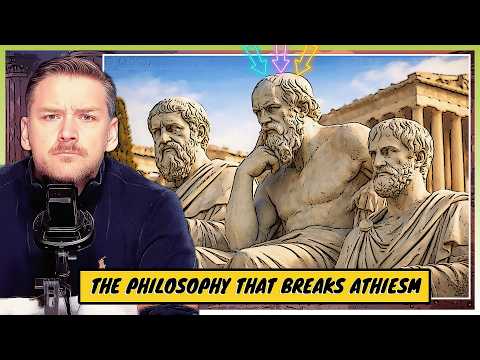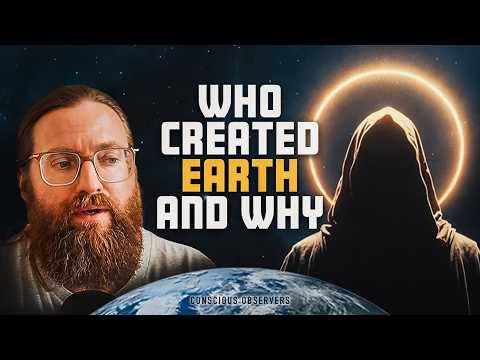
This article delves into the philosophical arguments surrounding the existence of God, examining religious, cosmological, and logical proofs, particularly focusing on Anselm's ontological argument and its critiques, including Alvin Plantinga's modern interpretations.
The question of whether there is a logical proof for the existence of God has been a topic of discussion for centuries. Traditionally, arguments for God's existence often reference religious texts or the order of the universe. However, these arguments can be circular or speculative. This article aims to explore various philosophical arguments regarding the existence of God, focusing on the ontological argument proposed by Anselm and its subsequent critiques and adaptations.
One of the most basic arguments for God's existence is the religious argument, which posits that God exists because religious texts state that He does. However, this argument is circular; if one does not believe in the religion, they cannot accept the existence of God based on its teachings. This leads to a perpetual cycle of questioning: to believe in God, one must accept the religion, but to accept the religion, one must first believe in God.
To avoid circular reasoning, some philosophers have turned to cosmological arguments, which assert that the universe's order implies a cause or reason for its existence. The argument suggests that if everything in the universe has a cause, there must be an initial cause, often identified as God. However, this argument assumes that the universe had a beginning, which is not definitively established by physics. The Big Bang theory, often cited as the universe's beginning, does not necessarily indicate a singular starting point; it could represent the end of a previous cycle of existence.
In the 11th century, Anselm of Canterbury proposed the ontological argument, which attempts to prove God's existence through logic rather than empirical evidence. Anselm defined God as the greatest conceivable being, one that cannot be surpassed in greatness. He argued that if such a being exists only in the mind, then a greater being could be conceived to exist in reality, which contradicts the definition of God. Therefore, God must exist in reality.
Despite its influence, Anselm's argument faced criticism, notably from Immanuel Kant, who argued that existence is not a predicate or a property that adds to the greatness of a being. Kant contended that one cannot simply assume that existence is a characteristic of perfection. Thus, Anselm's argument does not conclusively prove God's existence.
In the 1970s, philosopher Alvin Plantinga revisited Anselm's ontological argument, refining it using modal logic. Plantinga's argument is based on the concepts of possibility and necessity. He posits that if it is possible for a maximally great being (God) to exist, then such a being exists in some possible world. If God exists in any possible world, He must exist in all possible worlds, including our own.
Plantinga's argument is compelling but not without its flaws. Critics point out that the premise that a maximally great being is possible lacks sufficient justification. Additionally, Plantinga's argument relies on a specific modal logic system (S5), which may not universally apply. If one were to use a different logical framework, the argument could potentially collapse.
The exploration of logical proofs for the existence of God reveals a complex interplay between philosophy, logic, and theology. While arguments like Anselm's and Plantinga's offer intriguing insights, they also face significant critiques that challenge their validity. The discourse surrounding God's existence continues to evolve, inviting further examination and debate in future discussions. In upcoming articles, we will delve deeper into alternative logical frameworks that may provide new perspectives on this timeless question.