This blog post delves into Nietzsche's thought experiment of eternal recurrence, exploring its implications on human existence, suffering, and the pursuit of greatness through the lens of the Übermensh.
The phrase "Time is a flat circle" often evokes confusion and skepticism. At first glance, one might dismiss it as an abstract notion, but it carries profound philosophical implications, particularly in the context of Friedrich Nietzsche's concept of eternal recurrence. This idea suggests that time is cyclical, looping back on itself infinitely, much like a snake consuming its own tail.
Eternal recurrence is not merely a theory about the universe; rather, it serves as a thought experiment that challenges individuals to consider the nature of their existence. Nietzsche poses a provocative question: What if every moment of your life, every detail, is destined to repeat itself exactly as it is now? This concept is referred to by Nietzsche as the "formula for human greatness."
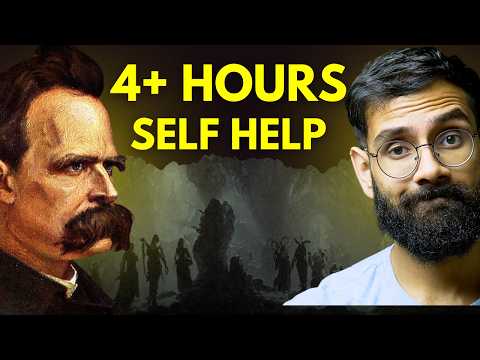
Nietzsche's exploration of eternal recurrence is deeply intertwined with his views on suffering and existence. He experienced significant personal suffering, including near blindness and debilitating migraines, leading him to perceive life as an endless cycle of pain. He believed that the universe is indifferent to human suffering, rendering our struggles ultimately meaningless. In this bleak view, Nietzsche identifies a common human response to suffering: ressentiment. This term describes the bitterness and resentment that arise when individuals feel powerless against their circumstances.
In the face of such harsh realities, Nietzsche challenges us to confront our suffering rather than evade it. The eternal return serves as a litmus test for one's character. When faced with the idea that every moment of our lives will recur for eternity, how do we respond?
Nietzsche introduces the concept of the Übermensh, or "Overman," as an ideal individual who can embrace life in all its complexities. This person is capable of reveling in both the beauty and the ugliness of existence. The Übermensh embodies a Dionysian principle that affirms life as it is, without delusion or denial.
Imagine a scenario where a little demon appears to you in your loneliest moment, proclaiming that this very moment will repeat for eternity. How would you react? If your instinct is to curse this thought, you may have succumbed to ressentiment. Conversely, if the idea of reliving that moment brings you joy, you exemplify the qualities of the Übermensh.
This leads us to a critical question: How must one live to desire the repetition of every moment endlessly? Nietzsche's challenge is not merely philosophical; it is a call to action. It urges individuals to cultivate a life that they would willingly relive, embracing both joy and suffering as integral parts of the human experience.
Nietzsche's concept of eternal recurrence invites us to reflect on our lives and the choices we make. It challenges us to confront the inevitability of suffering and to aspire to a higher state of being, where we can affirm life in all its forms. By embracing the idea of eternal recurrence, we can strive to become the Übermensh, living fully and authentically in a world that often feels indifferent to our struggles.