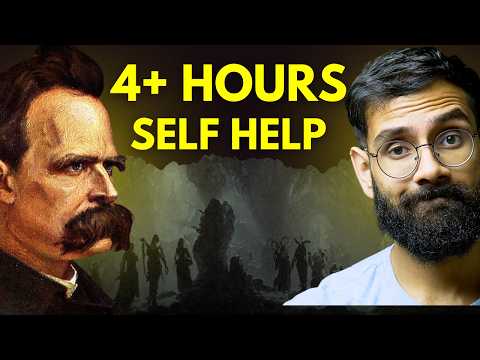
This blog post delves into Friedrich Nietzsche's philosophy regarding strength and weakness, emphasizing the psychological implications of weakness, the concept of slave morality, and the importance of self-affirmation and authenticity in personal and societal growth.
Have you ever considered what it truly means to be weak? Not in a physical sense, but psychologically? Weakness can be perceived as a harmless trait that evokes compassion, or it can represent a darker force that undermines confidence and happiness. Friedrich Nietzsche believed that weakness is more than just a limitation; it is a trap that leads individuals to mask their powerlessness behind fabricated moralities.
Imagine a friend who appears kind but whose help is insincere, or someone who plays the victim to manipulate others. Nietzsche viewed these behaviors as forms of dishonesty rooted in weakness. He argued that being weak is essentially rejecting life, avoiding the truth, and embracing a mask that disconnects us from reality.
Nietzsche posited that weakness is not merely an individual issue but a contagious force that threatens our ability to live authentically. He did not see weakness as a simple human trait; rather, he identified it as the foundation of one of the greatest mechanisms of manipulation: morality. For Nietzsche, weakness breeds resentment—a bitter feeling that arises when individuals, unable to confront their limitations, blame others for their dissatisfaction.
Nietzsche identified the creation of what he termed "slave morality," which exalts suffering, humility, and submission while demonizing strength, power, and autonomy. This moral inversion allows the weak to construct narratives that portray their limitations as virtues. For instance, someone who envies another's success may criticize them as arrogant, thus justifying their own impotence.
Weakness manifests itself in behaviors that distort the truth and sabotage human relationships. When individuals recognize their limitations, they face two choices: accept their vulnerability and seek to overcome it, or deny their weakness and project it onto the outside world. This denial leads to dishonesty, which Nietzsche viewed as a defense mechanism that ultimately fuels resentment.
As resentment takes hold, the weak individual may become a master of manipulation, using self-pity to garner support and disguising envy as morality. This cycle perpetuates weakness and spreads it throughout society. Nietzsche observed that it is easier to adopt a narrative that vilifies others than to confront one's own powerlessness.
Denying reality has profound consequences:
Nietzsche believed that while weakness is prevalent, it is not inevitable. Human beings have the potential to transcend their weaknesses by abandoning illusions and accepting reality. Strength, in Nietzsche's view, is not about oppression but about the courage to face life authentically.
To cultivate inner strength, one must reject self-deception. The strong accept their weaknesses as part of the growth process. This honesty allows individuals to overcome limitations. Strength is demonstrated through action—making difficult decisions, adapting to adversity, and taking risks to achieve meaningful goals.
Nietzsche highlighted historical figures like Leonardo da Vinci, whose strength lay not only in talent but also in a relentless pursuit of knowledge and self-improvement. True strength involves creating new values and possibilities, shaping one's destiny rather than conforming to societal norms.
Authenticity is crucial in Nietzsche's philosophy. Genuine strength attracts respect, while weakness often generates distrust. When individuals live in alignment with their essence, they command admiration. However, many seek respect through manipulation, which Nietzsche condemned as another form of weakness.
Nietzsche's critique extends to compassion, which he viewed as a weakness in disguise. While often well-intentioned, pity can breed dependency and perpetuate weakness. Instead of empowering individuals, it can infantilize them, undermining their self-confidence and preventing the development of necessary skills.
At the core of Nietzsche's philosophy is the idea of self-affirmation—the courage to accept life in all its complexities. This involves embracing challenges and recognizing that they are integral to personal growth. Self-affirmation allows individuals to navigate life honestly, transforming weaknesses into strengths.
Nietzsche's philosophy is not limited to individual growth; it also offers a blueprint for a robust society. A strong society values diversity and individuality, encouraging personal expression and the pursuit of excellence. This requires challenging conventional morality that often promotes mediocrity.
Nietzsche's legacy invites us to question the values that shape our interactions and social structures. By embracing self-affirmation and rejecting the glorification of weakness, we can contribute to a more resilient and authentic society. The challenge lies in cultivating inner strength and fostering environments that empower individuals to rise above their limitations. Are we ready to embrace life in its entirety and become agents of change in a world that often values weakness?