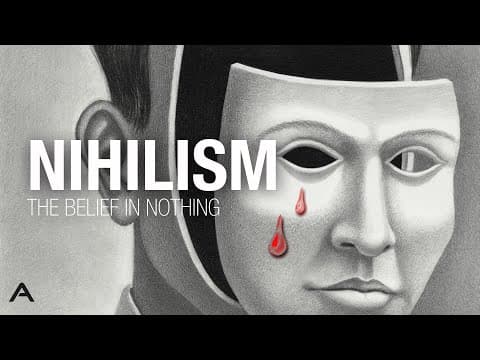
Nihilism, the belief in nothing, challenges the meaning of life by questioning the significance of existence, morality, and societal constructs. This blog post delves into the essence of nihilism, its distinctions from pessimism and cynicism, and its implications on human values and beliefs.
Nihilism is a philosophical doctrine that asserts the belief in nothing. It raises profound questions about existence, meaning, and morality, challenging the very foundations of how we perceive our lives and the world around us. This post will explore the essence of nihilism, its distinctions from other philosophies, and its implications on human values.
From the moment we are born until we die, we navigate through life with a myriad of experiences. Yet, the questions of where we came from and where we are going often remain unanswered. This uncertainty leads to the existential inquiry: "What is the meaning of life?" Throughout history, humanity has sought comfort in various ideologies, from religious beliefs to the love shared with others. However, nihilism posits that life is inherently meaningless.
Nihilism suggests that all actions, emotions, and experiences are devoid of intrinsic value. It is a perspective that many encounter at some point in their lives, often triggered by a crisis of belief or a significant life change. This existential questioning typically begins with the simple yet profound inquiry: "Why?" As individuals dig deeper into their core values, they may find themselves confronting the unsettling realization that there may be no definitive answers, leading to the conclusion that there is simply nothing.
The term "nihilism" derives from the Latin word "nihil," meaning "nothing," combined with "ism," denoting an ideology. This philosophy is often misunderstood and confused with pessimism. While pessimists maintain a negative outlook on life, believing that evil will ultimately triumph over good, nihilists reject the existence of good and evil altogether. In the nihilist's view, the world simply exists, and morality is a human construct.
Nihilism is frequently compared to cynicism and apathy, yet these philosophies differ significantly:
One of the intriguing aspects of nihilism is its paradox: if one believes in nothing, then that belief itself becomes something. This contradiction raises questions about the nature of belief and existence. Nihilism, unlike other philosophical doctrines, originated as a literary concept before evolving into a philosophical stance, resulting in various interpretations and branches of nihilism.
Nihilism can be categorized into several types:
The existential nihilist perspective raises profound questions about freedom and societal constraints. If individuals are bound by rules and moral codes that they cannot justify, are they truly free? This inquiry often leads to discomfort, as accepting the notion of a meaningless existence can evoke feelings of existential horror.
Friedrich Nietzsche, a pivotal figure in nihilistic thought, argued both for and against nihilism. He believed that the absence of an objective moral structure allows individuals to create their own meaning. Nietzsche famously declared, "God is dead," symbolizing the decline of traditional religious authority and the rise of individualism. However, he also warned that the rise of nihilism could lead to societal collapse, as the breakdown of established beliefs could result in chaos.
In contemporary society, we witness a potential resurgence of nihilistic thought. As traditional moral frameworks erode, individuals increasingly challenge long-standing beliefs and cultural practices. This shift raises critical questions about morality and the justification of actions. If life is indeed meaningless, how do we define right and wrong?
The inability to provide logical explanations for our moral beliefs complicates discussions about ethics. For instance, when faced with the question of whether to save a pet or a stranger, many choose their pet without being able to justify why a human life holds more value. This highlights the nihilist's point: if we cannot articulate why we adhere to certain moral codes, why do we choose to follow them?
Ultimately, nihilism invites us to confront the uncomfortable reality of existence. If life lacks inherent meaning, we are free to create our own purpose. As Shakespeare poignantly noted, life may be a tale told by an idiot, signifying nothing. However, this realization should not lead to despair; instead, it can inspire us to make the most of our fleeting existence. By embracing the chaos of reality, we can find satisfaction in living life on our own terms, regardless of its ultimate significance.