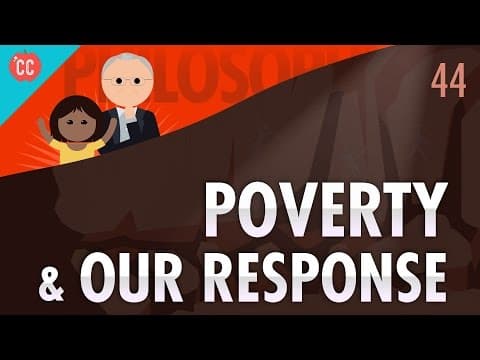
This blog post delves into the ethical considerations surrounding global poverty, contrasting Peter Singer's argument for moral obligation to help those in need with Garrett Hardin's lifeboat analogy, which suggests a more self-preserving approach. It highlights the preventable nature of poverty-related deaths and challenges readers to reflect on their responsibilities towards those suffering from extreme poverty.
UNICEF estimates that 12 children living in extreme poverty die every minute due to preventable causes such as lack of access to clean water, insufficient food, and diseases like malaria and intestinal worms. These deaths are not just statistics; they represent a horrifying truth that can be addressed with minimal resources. For instance, a mosquito net can be purchased for just $3, and a dose of medicine for intestinal worms costs less than 50 cents. The question arises: why are these children still dying when the means to save them are within our reach?
In affluent countries like the United States, the wealth exists to eradicate global poverty. However, many people grapple with the moral obligation to assist those they do not know personally. This raises fundamental questions about our responsibilities towards strangers in need. Some argue that since we did not cause their poverty, we are not obligated to help. Acts of charity are often viewed as supererogatory—good deeds that go beyond moral duty, akin to earning moral extra credit.
Philosopher Peter Singer challenges this viewpoint through a thought experiment. Imagine walking to class in your new $200 shoes when you see a child drowning in a shallow pond. If you can save the child but risk ruining your shoes, what should you do? Most would agree that saving the child is paramount, as a life is far more valuable than a pair of shoes.
Singer argues that the same moral obligation applies to children suffering from poverty around the world. The lives of those children are just as valuable as the child in the pond. He posits that if we can prevent great harm at a minimal cost to ourselves, we should do so. This perspective highlights a significant inconsistency in our moral reasoning: we feel compelled to help those we can see but often ignore those who are far away.
Singer acknowledges that it may not seem fair for one person to bear the burden of helping while others do nothing. However, he emphasizes that fairness is irrelevant in this context. What matters is the choice to act when one has the ability to prevent harm. If everyone in America donated just 1% of their income to combat extreme poverty, countless lives could be saved. Each individual bears responsibility for their inaction, regardless of what others choose to do.
Contrasting Singer's argument, philosopher Garrett Hardin presents the lifeboat analogy. He imagines a lifeboat with 50 people aboard, capable of holding only 10 more, while 100 people in the water plead for help. Hardin argues that allowing more people onto the boat would risk sinking it, ultimately endangering everyone aboard. He suggests that nations, like lifeboats, have obligations primarily to their own citizens and should not jeopardize their well-being to assist others.
Hardin's perspective implies that helping a few individuals in extreme poverty does not solve the underlying issues and may prolong their suffering. He argues that overpopulation is the root problem, and that halting aid could lead to a natural reduction in population, allowing nations to sustain themselves.
However, Hardin's analogy has significant flaws. First, it overlooks the fact that resources are not inherently scarce; they are unevenly distributed. This suggests that we can indeed help both ourselves and others. Second, Hardin's argument is based on arbitrary distinctions between nations, which could be extended to smaller groups, such as states or families. This raises ethical concerns about the validity of prioritizing one group over another based solely on proximity or affiliation.
The discussion surrounding global poverty and our moral obligations is complex and multifaceted. While Singer advocates for a universal responsibility to help those in need, Hardin presents a more self-preserving approach. Ultimately, the question remains: are we all in the same boat, and what responsibilities do we have towards those suffering from extreme poverty? This exploration invites readers to reflect on their values and the impact of their choices in addressing global poverty.