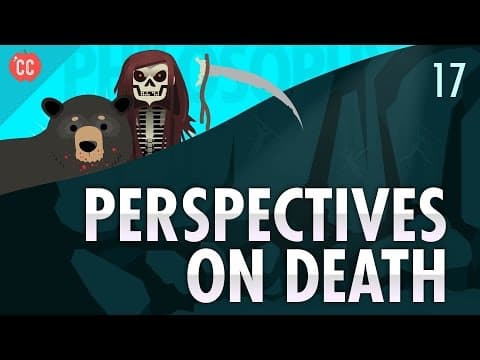
This blog post delves into various philosophical perspectives on death, exploring thoughts from Socrates, Epicurus, Zhuangzi, and contemporary philosopher Thomas Nagel. It discusses the nature of fear surrounding death, the concept of an afterlife, and the implications of valuing life experiences over mere existence.
Death is a universal experience that evokes a range of emotions, from fear to acceptance. How we perceive death is often influenced by our beliefs about the afterlife and the nature of existence. In this post, we will explore various philosophical perspectives on death, drawing insights from ancient philosophers like Socrates and Epicurus, as well as contemporary thinkers like Thomas Nagel.
When considering what we fear, many people list spiders, public speaking, or even calculus. However, death often tops the list. Our feelings about death are frequently shaped by our beliefs regarding an afterlife. For instance, ancient Egyptians believed that a person's heart would be weighed against a feather to determine their fate in the afterlife. Similarly, Christians envision Saint Peter at the pearly gates, deciding who enters heaven or faces eternal damnation. With such high stakes, it is understandable that many feel anxious about death, viewing it as the ultimate final exam.
In 399 BCE, Socrates faced death calmly, despite being sentenced for challenging the status quo in Athens. He argued that death should not be feared, presenting two possibilities:
Socrates found both scenarios comforting. He viewed dreamless sleep as a pleasant state and imagined the afterlife as a realm where he could engage in endless philosophical discussions with great thinkers of the past. He believed that focusing on nurturing the mind would prepare one for death, making it a beneficial transition rather than a fearful end.
Epicurus, a philosopher who lived about a century after Socrates, rejected the notion of an afterlife altogether. He argued that we are merely our bodies, and thus, death is simply the cessation of sensation. According to Epicurus:
He contended that fearing nonexistence is irrational because, once dead, there is no self to experience fear or regret. Epicurus encouraged people to focus on maximizing their current experiences rather than worrying about the end of life. He famously likened life to a night of drinking, where the hangover (death) is inevitable but not something one experiences directly.
In contemporary discussions, philosopher Thomas Nagel introduces the idea of philosophical FOMO (Fear of Missing Out). He suggests that people dread death not because of the act itself, but due to the experiences they will miss. For example, if one were to die today, they would miss out on finishing a favorite video game or witnessing significant events in the future.
Nagel points out that life existed long before any of us were born, and we did not mourn those experiences. He argues that if life is inherently good, then the loss of potential experiences due to an untimely death is indeed tragic. However, this perspective also invites reflection on what we value in life—whether it is the mere existence of life or the quality of experiences within it.
Ancient Chinese philosopher Zhuangzi, who lived around the same time as Epicurus, offered a different perspective on death. He questioned the fear of death by highlighting its inevitability and its role in the life cycle. Zhuangzi suggested that mourning death is akin to mourning other life transitions, such as a child growing up. Instead of viewing death as a loss, he encouraged celebrating it as a natural progression, akin to a going-away party for a grand journey.
Throughout history, philosophers have grappled with the concept of death, offering various insights that challenge our fears and perceptions. Socrates and Epicurus provide comforting arguments against the fear of death, while Nagel prompts us to consider what we value in life. Zhuangzi reminds us to celebrate life’s transitions rather than mourn them. Ultimately, these perspectives encourage us to reflect on our beliefs about death and how they shape our experiences of life.