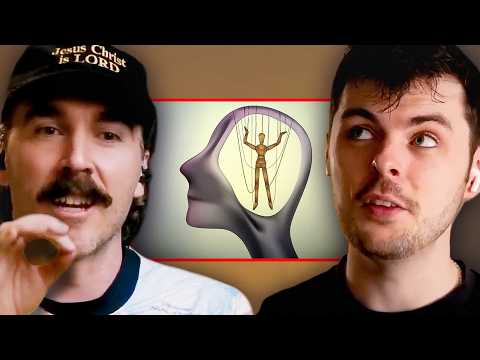
This blog post delves into a conversation about reason, free will, and virtue, exploring the implications of believing in free will versus determinism. It discusses how reasoning occurs, the nature of human decision-making, and the concept of virtue in the absence of free will, ultimately questioning the essence of human agency.
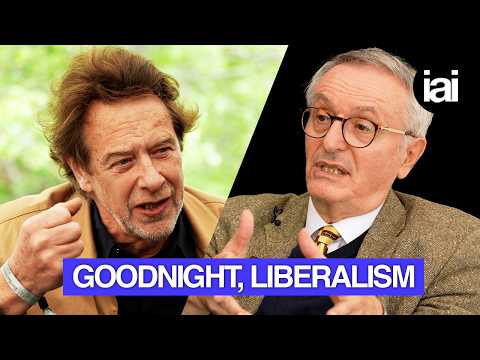
In a thought-provoking discussion, the complexities of reason, free will, and virtue are examined. The conversation raises fundamental questions about human agency and the nature of decision-making, challenging the traditional views of free will and its implications on moral behavior.
The dialogue begins with a question about the relationship between reason and free will. The speaker illustrates this by presenting two mathematical statements: "2 + 2 is 4" and "2 + 2 is 5." To deduce the correct conclusion, one must engage in reasoning, which seemingly requires the exercise of free will. However, the speaker argues that reasoning may not be a conscious choice but rather a process that happens to an individual.
The speaker elaborates on the nature of reasoning, suggesting that when someone is convinced of a conclusion, it is often due to the presentation of information rather than a deliberate choice. For instance, when explaining a complex mathematical problem, the process of understanding may feel automatic, as if the individual is led to a conclusion without exercising free will. This perspective raises questions about the nature of belief and understanding.
When asked about their belief in free will, the speaker expresses skepticism, stating that they have long been dubious about the concept. They acknowledge the mystery surrounding consciousness and the possibility that free will could exist in a form beyond rational comprehension. Despite compelling arguments against free will, the speaker leaves room for agnosticism, recognizing that human experience may transcend logical reasoning.
The conversation shifts to the phenomenon of differing opinions among individuals presented with the same information. The speaker explains that even in identical situations, people may arrive at different conclusions due to their unique backgrounds, experiences, and embedded assumptions. This variability highlights the complexity of human reasoning and the influence of personal history on decision-making.
The speaker suggests that humans can be viewed as biological machines, yet emphasizes the uniqueness of human experience. They acknowledge the mysterious nature of consciousness and the feeling of freedom, which complicates the discussion of free will. While they lean towards the idea that individuals lack ultimate agency over their actions, they recognize the profound implications of this belief.
The dialogue then explores the relationship between virtue and free will. The speaker notes that many people associate virtue with the exercise of free will, implying that virtuous actions stem from conscious choices. However, they argue that virtue can still exist without free will, as individuals may act in accordance with a concept of the good, even if their actions are not freely chosen.
The discussion raises the question of whether virtue can be genuinely admired if it is not the result of free will. The speaker illustrates this with the example of a firefighter who saves a child, suggesting that if the action was compelled rather than chosen, the admiration for the act may diminish. This leads to a deeper inquiry into the nature of character and the essence of virtue ethics, which focuses on the moral character rather than the specific actions taken.
The conversation concludes with the acknowledgment that the questions surrounding free will, reasoning, and virtue are complex and multifaceted. The speaker emphasizes that the ongoing debate about human agency continues to challenge our understanding of morality and decision-making. Ultimately, the dialogue invites readers to reflect on the nature of their beliefs regarding free will and the implications these beliefs have on their understanding of virtue and human behavior.