This blog post explores the various stereotypes associated with Romania, highlighting its cultural diversity, economic disparities, and the unique characteristics of its regions, from the developed north to the impoverished south, while also addressing the misconceptions and humor surrounding the country.
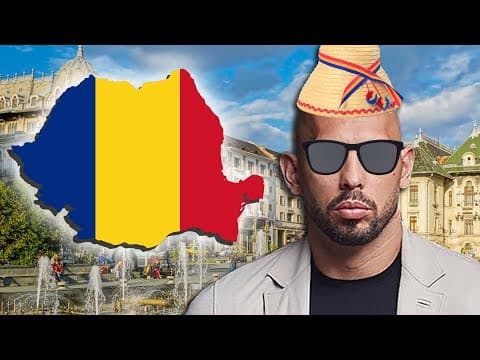
Romania, often referred to as the wild east of Europe, is a country that has garnered a reputation for its eccentricities and cultural quirks. While many stereotypes exist, they often fail to capture the true essence of this fascinating nation. In this post, we will explore the various stereotypes associated with Romania, its regions, and the cultural nuances that define its people.
Romania is known for its wild reputation, where everything seems permitted, and no one's wallet is off limits. It has become a popular destination for manosphere influencers seeking to avoid taxes, but this has also led to serious issues, including arrests for human trafficking. Despite these negative associations, many Romanians view their country with pride, and it is often referred to as a sweet adoptive country by those who have come to love it.
The northern part of Romania is characterized by its development, featuring beautiful castles and majestic forests. However, as one travels south across the Carpathians, the landscape changes dramatically. The regions of Oltenia and Muntenia, once the industrial hub and breadbasket of Romania, have suffered economic decline, leading to their reputation as the poorest and least developed areas of the country.
Oltenia, particularly the city of Craiova, is often humorously compared to Ohio in the United States. The city has a reputation for its eccentricities, including residents who take sword fighting to heart, leading to bizarre street duels. A subscriber humorously described the seven wonders of Karacal, a city in Oltenia, highlighting its peculiarities, such as a fire in the fire department and a bakery located on Hunger Street.
Bucharest, the capital city, is often despised by many Romanians. The city underwent significant destruction under the regime of Nicolae Ceaușescu, who aimed to transform it into a dystopian version of Moscow. This led to the demolition of much of the historic architecture, leaving behind a city that many find filthy and unpleasant. Visitors often remark on the overwhelming smell and chaotic traffic, likening it to New York but with fewer rats.
The residents of Bucharest can be divided into two groups: Moldavians, who have migrated from the impoverished region of Moldavia, and those who emulate the flashy lifestyles seen on reality TV. This dichotomy adds to the city's unique character, making it a focal point of Romanian culture.
Transylvania is perhaps the most famous region of Romania, often associated with Dracula. The locals are stereotyped as speaking slowly, which annoys the faster-paced residents of Bucharest. This region is known for its stunning mountains and multiculturalism, but it also suffers from a sense of superiority among its residents, particularly in cities like Cluj-Napoca.
Cluj-Napoca is recognized for its booming IT industry and has developed a reputation for its residents' insufferable superiority complex. Despite earning slightly better salaries than the national average, many Cluj residents complain about their living conditions, often comparing themselves to those in other cities like Timișoara, which they view as inferior.
Moldavia, often depicted as a region of hardship, is characterized by stereotypes of alcoholism and poverty. Cities like Iași serve as a beacon of hope amidst decay, attracting Moldovan immigrants seeking better opportunities. Vaslui, on the other hand, is humorously associated with excessive drinking and neglect, often becoming the punchline of jokes among Romanians.
Romania is a country rich in culture and diversity, yet it is often misunderstood through the lens of stereotypes. From the developed north to the impoverished south, each region has its unique characteristics and challenges. While humor often accompanies discussions about Romania, it is essential to recognize the underlying truths and complexities that define this remarkable nation. Understanding these nuances can lead to a more profound appreciation of Romania and its people, beyond the surface-level stereotypes that often dominate conversations.