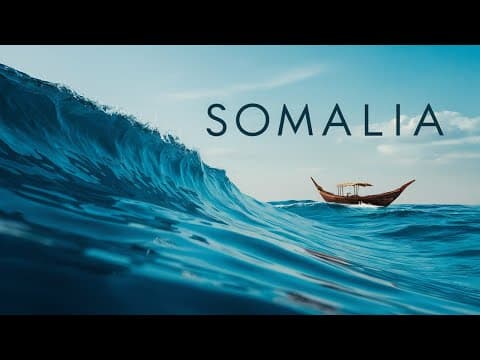
Somalia, located in the Horn of Africa, boasts the longest coastline in mainland Africa and a rich cultural heritage. This blog post explores its geography, history, and culinary traditions, highlighting the significance of clan structures, the impact of Islam, and the country's literary legacy.
Somalia, a country located in the Horn of Africa, is known for its rich cultural heritage and captivating literary tradition. With the longest coastline in mainland Africa, stretching 3,325 kilometers (1,879 miles) along the Gulf of Aden and the Indian Ocean, Somalia offers a unique blend of geography, history, and culture. This blog post will explore these aspects in detail, providing insights into the Somali way of life.
Somalia covers a land area of 637,656 square kilometers (approximately 246,201 square miles), making it similar in size to Texas. The country is bordered by Djibouti to the northwest, Ethiopia to the west, and Kenya to the southwest. Somalia can be divided into several distinct geographical regions:
The northwestern part of Somalia is part of the Ethiopian xeric grasslands and shrublands region. This arid area receives very limited rainfall and has sparse vegetation, making it a challenging environment for agriculture.
The central and southern regions fall within the Somali Acacia-Cipher bushlands and thickets eco-region. This semi-arid area receives slightly more rainfall and is home to Acacia, Chifa, and Baobab trees. The Juba and Shabelle river valleys in South Central Somalia form part of the floodplain eco-region, characterized by rich alluvial soils. These river valleys constitute the agricultural heartland of Somalia due to their greater water availability and fertile soils.
The northeastern coastal region is known as the Somali Montane xeric woodlands eco-region. This area receives marginally more precipitation due to its proximity to the Indian Ocean and features moist evergreen forests at higher elevations.
Somalia has a population of around 15 million people, predominantly belonging to various ethnically Somali clans. Ethnic Somalis constitute about 85% of the population, and the society is organized by patrilineal clan membership. Major clan families include the Dood Hawii, Isaak, and Rahanweyn, which are further divided into smaller clans and sub-clans, forming important social identities.
Minority ethnic groups include the Bantu, Benadir, Bajuni, and Gabooya. Inter-clan relationships have historically influenced politics and conflict in the region. The official languages of Somalia are Somali and Arabic, with English and Italian also used in education and commerce.
The predominant religion in Somalia is Sunni Islam, with nearly all Somalis identifying as Muslim. Islam reached Somalia between the 7th and 10th centuries CE, leading to the conversion of the Somali people. The role of religious leaders is central to governance and social life, and Somalia is governed under Sharia law with influences from civil law.
Somali cuisine reflects the country's geographic location, Islamic faith, and nomadic heritage. Staple ingredients include grains, vegetables, meat, and spices, with signature dishes showcasing both native and foreign influences. Some popular Somali dishes include:
Somalia has a rich history, with evidence of human life dating back over 3 million years. Cave paintings near Hara date to 5,000 BCE, and by 3,000 BCE, people were producing pottery and farming sorghum. Ancient Somalia was linked to Egypt and other civilizations through trade, with city-states like Opone and Melon exporting spices, ivory, and slaves.
Islam arrived by the 10th century CE, leading to the emergence of Muslim sultanates and city-states. Mogadishu became the center of the Ajuran Sultanate, which controlled much of Southern Somalia from the 13th to the 17th centuries. The War Sangali Sultanate rose in the northeast, ruling until the 1920s.
In the late 1800s, Somalia was partitioned by European powers, with British, Italian, and French forces conquering different regions. The struggle for independence culminated in 1960 when British Somaliland and Italian Somalia united to form the independent Somali Republic. However, the country faced turmoil after the rise of General Siad Barre in 1969, leading to state collapse and unrest until the establishment of an internationally backed government in 2012.
Somalia's fertile river valleys support the cultivation of bananas, sorghum, corn, and sugar cane. Farmers also produce mangoes, tomatoes, onions, and beans, but opportunities are limited by poor infrastructure and lack of irrigation. The country has the potential to increase productivity and exports with greater investments in agriculture.
In the arid grasslands, Somalis tend to camels, cattle, sheep, and goats, with livestock sales being the largest export. However, exports are restricted by Saudi Arabia's ban due to disease concerns. Fishermen venture into the Indian Ocean, which has some of the richest fishing grounds, but piracy and lack of modern fleets hinder foreign fishing vessels.
Somalia is renowned for its rich literary heritage, particularly its oral literature. Somali poems, stories, proverbs, and riddles have been passed down through generations, providing insight into Somali culture and identity. One of the most important forms of Somali oral literature is gabay, a type of epic poem that tackles various topics, including heroism, war, and spirituality.
Poetry contests are a celebrated part of Somali culture, where poets improvise verses on philosophical or social issues to showcase their eloquence and wit. Major contests are held in Hara and Balad, with winners gaining significant respect and status.
Somali oral literature was not written until a Latin script was developed in the 1970s, allowing authors like Nuruddin Farah to record works in the Somali language. Despite the advent of technology, oral poetry and storytelling continue to hold significant cultural importance today.
Somalia is a country with a rich tapestry of history, culture, and geography. From its diverse landscapes and agricultural potential to its deep-rooted traditions and literary heritage, Somalia offers a unique perspective on life in the Horn of Africa. Understanding Somalia's past and present is essential to appreciating its vibrant culture and the resilience of its people.