This blog post delves into Albert Camus' philosophy of the absurd, exploring the meaninglessness of life and how individuals can find freedom and joy in a seemingly indifferent universe. It contrasts Camus' views with those of Kierkegaard, emphasizing the importance of living fully in the present despite life's inherent absurdity.
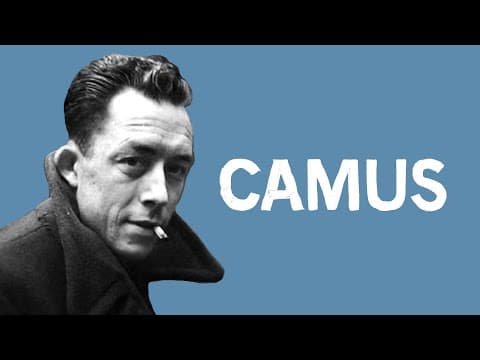
Have you ever wondered why bad people often seem to get away with their actions while good people face terrible hardships? This leads to a deeper question: is the meaning we attribute to life merely an illusion, a manmade creation to make the mystery of existence more bearable? Is there a divine plan behind our experiences, or is life utterly meaningless? French-Algerian philosopher Albert Camus believed that life has no inherent meaning, which he described as absurdity. This perspective can lead to despair, but Camus argued that recognizing the absurdity of life can also liberate us.
Camus posited that the universe is irrational and indifferent to human existence, suggesting that humanity is nothing more than a cosmic joke. He acknowledged that while this realization might lead to despair, it also presents an opportunity to free ourselves from the shackles of hope and experience existence more fully.
Danish philosopher Søren Kierkegaard sought a purpose to live and die for, struggling with the irrational aspects of existence. He believed that finding something outside ourselves, such as religion, could provide clarity and guidance. Kierkegaard advocated for a leap of faith, embracing a higher purpose despite the lack of solid proof. However, Camus criticized this approach, referring to it as "philosophical suicide," as it dissolves the confrontation with the absurd.
Camus recognized the limits of reason and the inscrutability of existence. He argued that all forms of meaning we attribute to life are constructs of the human mind. In his philosophical essay, "The Myth of Sisyphus," he stated, "I don't know whether this world has a meaning that transcends it. But I know that I do not know that meaning, and that it is impossible for me just now to know it. What can a meaning outside my condition mean to me? I can understand only in human terms."
Thus, Camus concluded that the only honest observation we can make about the world is that it is meaningless. There are no universal values or divine plans; everything happens randomly. This realization leads to the concept of the absurd.
What did Camus mean by the absurd? He did not imply that humans are absurd beings or that the world itself is absurd. Instead, he highlighted the predicament of being rational beings with a strong desire to create order and meaning in an irrational and indifferent universe. The universe's response to our quest for meaning is silence, which Camus termed the absurd.
The awareness of our existence as mere primates on a rock in an endless universe can lead to despair. The repetitive nature of life, where we follow a culturally accepted path from birth to grave, raises the question: what is the point of it all? Camus illustrated this with the mundane routine of daily life, stating, "Rising, streetcar, four hours in the office or the factory, meal, streetcar, four hours of work, meal, sleep, and Monday, Tuesday, Wednesday, Thursday, Friday and Saturday according to the same rhythm."
However, Camus argued that a world without meaning is an opportunity to let go of illusions and confront harsh realities. Without the burden of last judgment or an afterlife, we can focus entirely on our current existence. The absence of transcendent morals allows us to create our own values. With limited time on earth, we should make the best of it, perhaps enjoying a simple pleasure like a hot cup of coffee.
Camus believed that we should not accept the absurd but rather revolt against it. Despite our ignorance of the greater picture, we have control over our thoughts and actions. The absurd hero lives life to the fullest in the face of absurdity, choosing to embrace despair rather than succumb to it. Living an absurd life means rejecting hope and experiencing the present moment with lucidity.
Camus stated, "Hence what he demands of himself is to live solely with what he knows, to accommodate himself to what is and to bring in nothing that is not certain. He is told that nothing is. But this at least is a certainty. And it is with this that he is concerned: he wants to find out if it’s possible to live without appeal."
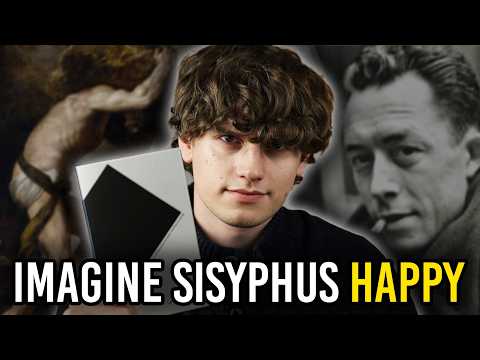
Living without appeal means being fully present, aware of the absurdity of life, and not desiring anything more from a conceptual future. Camus illustrated this concept through the myth of Sisyphus, who was condemned to push a rock uphill only for it to roll back down each time he neared the top. This endless, futile labor is seen as a punishment, but Camus invites us to imagine Sisyphus happy.
What if one could find joy in despair and refuse to bow to the misery life presents? Camus challenges us to consider that there is something profoundly rebellious about finding happiness in what is perceived as punishment.
In conclusion, Albert Camus' philosophy of the absurd invites us to confront the meaninglessness of life and to embrace our existence fully. By recognizing the absurd, we can liberate ourselves from false hopes and create our own meaning in the present moment, ultimately leading to a richer, more authentic experience of life.